





• Home
  • About us
  • Product
  • Services
    • Hearing Aid Dealer in Delhi
      • Digital Hearing Aids In Dwarka
      • Hearing Test In Dwarka
      • Hearing Aid Fitting In Dwarka
      • Audiologist In Dwarka
    • Hearing Aid in Noida
    • Hearing Aid Centre Greater Noida
    • Hearing Aid Centre Ghaziabad
    • Hearing Aid Centre Gurugram
    • Hearing Aid Centre Faridabad
    • Best Hearing Aids Mumbai
    • Best Hearing Aids Patna
    • Best Hearing Aids Chandigrah
    • Best Hearing Aids Varanasi
    • Best Hearing Aids Meerut
  • Hearing Aids
    • Signia Hearing Aid
    • Phonak Hearing Aid
    • Oticon Hearing Aid
    • Resound Hearing Aid
    • Widex Hearing Aid
  • Blog
  • Our Centre Location
  • Contact Us
  • +91 98112 24051/ 98112 24059
  • info@soundrichhearing.com
  • Mon-Sat 10am - 7.30pm
Request Appointment
Asset-2
  • Home
  • About us
  • Product
  • Services
    • Hearing Aid Dealer in Delhi
      • Digital Hearing Aids In Dwarka
      • Hearing Test In Dwarka
      • Hearing Aid Fitting In Dwarka
      • Audiologist In Dwarka
    • Hearing Aid in Noida
    • Hearing Aid Centre Greater Noida
    • Hearing Aid Centre Ghaziabad
    • Hearing Aid Centre Gurugram
    • Hearing Aid Centre Faridabad
    • Best Hearing Aids Mumbai
    • Best Hearing Aids Patna
    • Best Hearing Aids Chandigrah
    • Best Hearing Aids Varanasi
    • Best Hearing Aids Meerut
  • Hearing Aids
    • Signia Hearing Aid
    • Phonak Hearing Aid
    • Oticon Hearing Aid
    • Resound Hearing Aid
    • Widex Hearing Aid
  • Blog
  • Our Centre Location
  • Contact Us
  • Home
  • About us
  • Product
  • Services
    • Hearing Aid Dealer in Delhi
      • Digital Hearing Aids In Dwarka
      • Hearing Test In Dwarka
      • Hearing Aid Fitting In Dwarka
      • Audiologist In Dwarka
    • Hearing Aid in Noida
    • Hearing Aid Centre Greater Noida
    • Hearing Aid Centre Ghaziabad
    • Hearing Aid Centre Gurugram
    • Hearing Aid Centre Faridabad
    • Best Hearing Aids Mumbai
    • Best Hearing Aids Patna
    • Best Hearing Aids Chandigrah
    • Best Hearing Aids Varanasi
    • Best Hearing Aids Meerut
  • Hearing Aids
    • Signia Hearing Aid
    • Phonak Hearing Aid
    • Oticon Hearing Aid
    • Resound Hearing Aid
    • Widex Hearing Aid
  • Blog
  • Our Centre Location
  • Contact Us
Asset-2
  • Home
  • About us
  • Product
  • Services
    • Hearing Aid Dealer in Delhi
      • Digital Hearing Aids In Dwarka
      • Hearing Test In Dwarka
      • Hearing Aid Fitting In Dwarka
      • Audiologist In Dwarka
    • Hearing Aid in Noida
    • Hearing Aid Centre Greater Noida
    • Hearing Aid Centre Ghaziabad
    • Hearing Aid Centre Gurugram
    • Hearing Aid Centre Faridabad
    • Best Hearing Aids Mumbai
    • Best Hearing Aids Patna
    • Best Hearing Aids Chandigrah
    • Best Hearing Aids Varanasi
    • Best Hearing Aids Meerut
  • Hearing Aids
    • Signia Hearing Aid
    • Phonak Hearing Aid
    • Oticon Hearing Aid
    • Resound Hearing Aid
    • Widex Hearing Aid
  • Blog
  • Our Centre Location
  • Contact Us
  • Home
  • About us
  • Product
  • Services
    • Hearing Aid Dealer in Delhi
      • Digital Hearing Aids In Dwarka
      • Hearing Test In Dwarka
      • Hearing Aid Fitting In Dwarka
      • Audiologist In Dwarka
    • Hearing Aid in Noida
    • Hearing Aid Centre Greater Noida
    • Hearing Aid Centre Ghaziabad
    • Hearing Aid Centre Gurugram
    • Hearing Aid Centre Faridabad
    • Best Hearing Aids Mumbai
    • Best Hearing Aids Patna
    • Best Hearing Aids Chandigrah
    • Best Hearing Aids Varanasi
    • Best Hearing Aids Meerut
  • Hearing Aids
    • Signia Hearing Aid
    • Phonak Hearing Aid
    • Oticon Hearing Aid
    • Resound Hearing Aid
    • Widex Hearing Aid
  • Blog
  • Our Centre Location
  • Contact Us
Hearing Aid

How Audiologists Help Seniors Stay Socially Connected: A Complete Guide to Hearing Care and Healthy Ageing

By Soundrich Hearing 

Growing older should not mean becoming disconnected from the conversations, relationships, and social experiences that make life meaningful. However, hearing loss in seniors can gradually make everyday communication more difficult. A simple family conversation may become tiring, group discussions may feel overwhelming, and social gatherings may start to feel stressful rather than enjoyable.

Many seniors do not consciously decide to become socially isolated. Instead, they may slowly begin avoiding situations where hearing is difficult. They may speak less during family gatherings, stop attending community events, avoid phone calls, or prefer staying at home because following conversations requires too much effort.

At Soundrich Hearing, we understand that hearing care for seniors is not only about improving hearing levels. It is about helping individuals communicate with confidence, maintain meaningful relationships, and continue participating in the activities they enjoy.

With the right hearing evaluation, professional guidance from an experienced audiologist, appropriate hearing aid technology, and ongoing family support, seniors can continue living an active and socially connected life.

Why Hearing Loss in Seniors Can Lead to Social Isolation

Communication plays an essential role in maintaining relationships. When hearing becomes difficult, even ordinary conversations can require significant mental effort.

A senior experiencing hearing loss may hear that someone is speaking but struggle to understand specific words. This becomes particularly challenging when there is background noise, several people are speaking at once, or the speaker is talking softly.

Over time, these situations can become frustrating.

Common signs of social withdrawal caused by hearing difficulties include:

  • Avoiding family functions or social gatherings
  • Sitting quietly during group conversations
  • Frequently asking others to repeat themselves
  • Avoiding crowded or noisy environments
  • Reducing phone conversations
  • Increasing television or mobile volume
  • Feeling embarrassed after misunderstanding conversations
  • Preferring isolation over difficult communication

The challenge is not simply that seniors cannot hear certain sounds. In many cases, they may hear sounds but struggle to understand speech clearly.

For example, a senior may hear someone talking across the room but find it difficult to distinguish similar sounds or follow individual words.

This repeated communication difficulty can gradually reduce confidence.

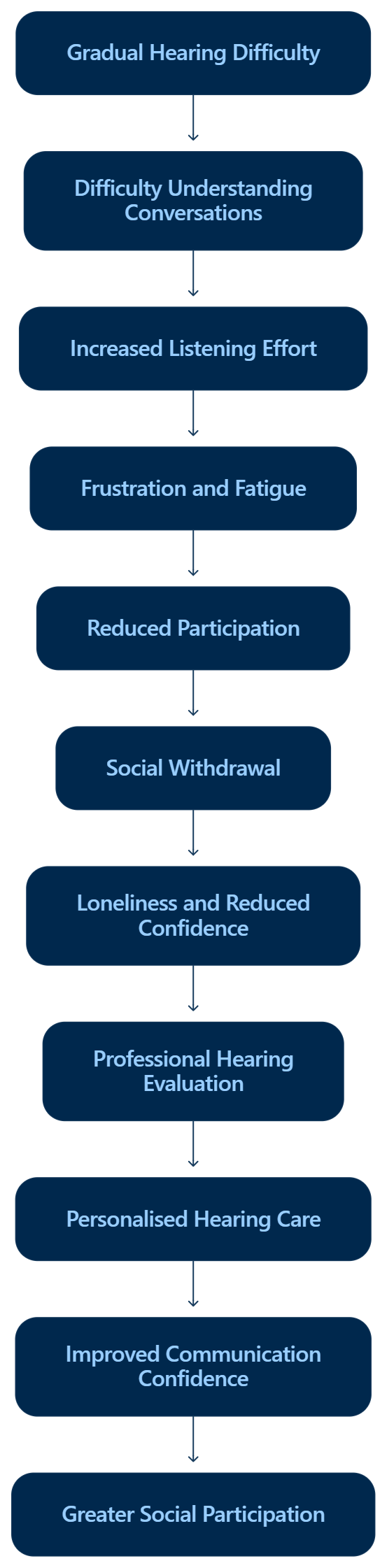
The Social Cycle of Untreated Hearing Loss

Early hearing care can help interrupt this cycle and support healthier communication.

How Does an Audiologist Help Seniors With Hearing Loss?

An audiologist plays an important role in identifying, assessing, and managing hearing difficulties.

Hearing care should never be approached as a one-size-fits-all process. Every senior has different hearing needs, communication habits, lifestyles, and expectations.

An experienced audiologist considers several important factors before recommending a hearing solution.

Comprehensive Hearing Assessment

The first step is a detailed hearing evaluation.

A hearing assessment helps identify:

  • The type of hearing loss
  • The degree of hearing loss
  • Which frequencies are difficult to hear
  • Speech understanding ability
  • Whether hearing loss affects one or both ears
  • The individual’s everyday communication challenges

The results help the audiologist understand how hearing difficulties may affect daily life.

A senior who primarily struggles during family conversations may require different hearing support from someone who frequently attends social events or spends time in noisy environments.

Understanding the Senior’s Lifestyle

Professional hearing care should consider how a person lives, communicates, and interacts with others.

During a consultation, an audiologist may discuss difficulties such as:

  • Understanding grandchildren
  • Following conversations during family gatherings
  • Hearing television clearly
  • Communicating on the phone
  • Understanding speech in restaurants
  • Participating in religious or community events
  • Hearing conversations in vehicles
  • Managing conversations in crowded environments

This information helps create a personalised hearing care plan.

At Soundrich Hearing, we believe that hearing technology should support the person’s lifestyle rather than simply focus on hearing test numbers.

Why Professional Hearing Aid Fitting Is Important for Seniors

Choosing a hearing aid is only one part of the hearing care process.

A hearing aid must also be programmed and adjusted according to the individual’s hearing requirements.

Modern digital hearing aids can be customised based on:

  • Hearing loss levels
  • Speech understanding needs
  • Background noise challenges
  • Listening preferences
  • Lifestyle requirements
  • Comfort preferences

A professionally fitted hearing aid can provide a more comfortable listening experience than using a device without proper assessment and programming.

Hearing Aid Adjustment Takes Time

Many seniors have lived with hearing difficulties for months or even years.

When hearing is improved, familiar sounds may initially seem unusually loud or different. The brain needs time to become accustomed to hearing sounds more clearly again.

The adjustment process may involve:

  1. Initial hearing assessment
  2. Selection of suitable hearing technology
  3. Hearing aid fitting
  4. Device programming
  5. Daily usage and adaptation
  6. Follow-up adjustments
  7. Ongoing hearing care and support

Regular follow-up appointments are particularly important for senior hearing care.

How Hearing Aids Can Help Seniors Stay Socially Connected

Properly selected and fitted hearing aids can improve access to speech and everyday sounds.

This may help seniors feel more comfortable participating in conversations.

Easier Family Conversations

Family conversations often involve multiple voices, background sounds, and changing speaking distances.

Modern hearing aids can include technologies designed to support speech understanding and reduce the impact of unwanted background noise.

This can make it easier for seniors to participate instead of simply listening from the sidelines.

Improved Communication With Grandchildren

Children often speak quickly, softly, or while moving around.

These communication patterns can be challenging for seniors with hearing loss.

Improved access to speech sounds may help make conversations with grandchildren easier and more enjoyable.

Greater Confidence in Social Settings

When communication becomes less stressful, many seniors feel more confident attending social activities.

They may become more comfortable participating in:

  • Family celebrations
  • Community gatherings
  • Religious events
  • Social clubs
  • Meetings with friends
  • Group activities
  • Outdoor events

Less Listening Fatigue

Struggling to understand conversations can require significant concentration.

When seniors constantly try to fill in missing words, follow multiple speakers, or guess what someone said, conversations can become mentally exhausting.

Appropriate hearing support may reduce some of this listening effort and make communication feel more natural.

What Features Should Seniors Consider When Choosing a Hearing Aid?

The best hearing aid for a senior depends on their individual hearing loss, lifestyle, dexterity, comfort preferences, and communication needs.

However, certain features are particularly useful for many elderly users.

Rechargeable Hearing Aids

Rechargeable hearing aids can be convenient for seniors who find small disposable batteries difficult to handle.

A charging system can simplify daily hearing aid maintenance.

Potential benefits include:

  • No frequent battery replacement
  • Easy overnight charging
  • Convenient daily routine
  • Reduced handling of small components

Speech Enhancement Technology

Understanding speech is one of the most important concerns for people with hearing loss.

Modern hearing aids may include advanced speech processing technology designed to improve speech clarity in different listening environments.

This can be particularly helpful during:

  • Family gatherings
  • Restaurants
  • Community events
  • Group conversations
  • Busy public environments

Background Noise Management

Background noise is one of the most common communication challenges for seniors.

Restaurants, markets, celebrations, and family gatherings can include multiple sound sources at the same time.

Advanced hearing aids may use directional microphones and digital sound processing to help prioritise speech and manage unwanted environmental sounds.

Bluetooth Connectivity

Bluetooth-enabled hearing aids can connect with compatible smartphones and other devices.

Depending on the device, this may allow seniors to stream:

  • Phone calls
  • Television audio
  • Music
  • Digital content

This feature can be especially useful for seniors who regularly communicate with family members through smartphones.

Simple Controls

For many seniors, ease of use is more important than having numerous complicated features.

A hearing aid should be comfortable and practical for daily use.

Important considerations include:

  • Easy charging
  • Comfortable fit
  • Simple volume control
  • Reliable performance
  • Easy cleaning and maintenance
  • Professional support

Types of Hearing Aids Commonly Considered for Seniors

There are several hearing aid styles available, and the most suitable option depends on individual requirements.

Receiver-in-Canal Hearing Aids

Receiver-in-Canal, or RIC, hearing aids are commonly used because they can provide a balance of performance, comfort, and discreet design.

They are suitable for many levels of hearing loss and often include advanced digital features.

Behind-the-Ear Hearing Aids

Behind-the-Ear hearing aids are positioned behind the ear and connected to the ear through a tube or customised fitting.

They may be suitable for seniors who require:

  • Higher amplification
  • Easy handling
  • Strong performance
  • Durable design

Completely-in-Canal Hearing Aids

Completely-in-Canal or CIC hearing aids are designed to fit inside the ear canal.

They may be suitable for individuals who prefer a more discreet appearance, depending on their hearing requirements and ear anatomy.

Rechargeable Hearing Aids

Rechargeable hearing aids are available in several styles and can simplify daily use for seniors who prefer not to manage disposable batteries.

Why Follow-Up Care Is Essential for Senior Hearing Aid Users

Hearing care should not end after purchasing a hearing aid.

Follow-up care can significantly influence long-term comfort and satisfaction.

During follow-up appointments, the audiologist may:

  • Adjust sound settings
  • Review speech clarity
  • Address comfort concerns
  • Check device performance
  • Provide cleaning guidance
  • Discuss listening challenges
  • Help with connectivity features

Small adjustments can make a significant difference to everyday listening comfort.

Seniors should feel comfortable discussing any concerns they experience while using their hearing aids.

The Importance of Family Support During Hearing Treatment

Family involvement can make the hearing care journey easier and more successful.

Many seniors may initially feel uncertain about wearing hearing aids.

Some may worry about appearance, while others may believe that hearing loss is simply a normal part of ageing that cannot be addressed.

Supportive family members can help create a positive environment.

Helpful Ways Families Can Support Seniors

Family members can:

  • Encourage regular hearing evaluations
  • Attend appointments when appropriate
  • Help seniors understand hearing care recommendations
  • Be patient during the adjustment period
  • Encourage consistent hearing aid use
  • Learn how to communicate more effectively
  • Support regular follow-up visits

It is also important to remember that shouting is not always the best solution.

Clear communication often works better when family members:

  • Face the senior while speaking
  • Maintain natural speaking speed
  • Reduce unnecessary background noise
  • Speak clearly without exaggerating
  • Gain the person’s attention before starting a conversation

These small changes can improve communication for everyone.

When Should a Senior Get a Hearing Evaluation?

A hearing evaluation should be considered when communication begins to feel consistently difficult.

Common signs include:

Frequently Asking People to Repeat Themselves

If a senior regularly says “What?” or asks for repetition, it may indicate difficulty understanding speech.

Difficulty Following Group Conversations

Group conversations are often more challenging than one-to-one communication.

Difficulty following multiple speakers may be an important sign of hearing problems.

Increasing Television Volume

A consistently high television volume may indicate that the person requires increased sound levels for comfortable listening.

Difficulty Understanding Speech in Noise

A senior may hear reasonably well in quiet environments but struggle significantly in restaurants, markets, or family gatherings.

Social Withdrawal

Avoiding conversations or social activities may sometimes be related to communication difficulties.

Frequently Misunderstanding Conversations

If words are regularly misheard or conversations are misunderstood, a professional hearing assessment can help identify whether hearing loss is contributing to the problem.

Ringing or Buzzing Sounds

Persistent ringing, buzzing, or other unusual sounds in the ears should be discussed with an appropriate healthcare professional.

What Happens During a Senior Hearing Test?

A professional hearing evaluation is generally a straightforward process.

The audiologist may begin by discussing:

  • Hearing concerns
  • Medical and hearing history
  • Communication difficulties
  • Daily lifestyle
  • Listening environments

The evaluation may include tests that assess how well different sounds and speech are heard.

The results are then explained and discussed.

If hearing loss is identified, the audiologist can recommend appropriate next steps.

This may include:

  • Hearing monitoring
  • Further medical evaluation when necessary
  • Hearing aid recommendations
  • Communication strategies
  • Follow-up hearing care

How Seniors Can Adjust Successfully to Hearing Aids

Adapting to hearing aids is a process.

The following approach can support a smoother adjustment period.

Start With Regular Daily Use

Consistent use helps the brain become familiar with improved sound input.

Seniors should follow the usage guidance provided by their hearing care professional.

Begin in Comfortable Environments

Starting conversations in quieter settings can help users become familiar with their hearing aids.

Gradually, they can begin using them in more challenging environments.

Attend Follow-Up Appointments

Adjustments may be required after the initial fitting.

Regular feedback helps the audiologist optimise the device for real-life listening experiences.

Communicate Any Difficulties

Seniors should mention issues such as:

  • Uncomfortable sound levels
  • Difficulty understanding speech
  • Background noise concerns
  • Physical discomfort
  • Problems handling the device

Professional adjustments can often improve the experience.

Choosing the Right Audiologist for Senior Hearing Care

Choosing an experienced audiologist is an important part of the hearing care journey.

Families should consider several factors when selecting a hearing care provider.

Comprehensive Hearing Evaluation

The clinic should conduct an appropriate hearing assessment before recommending a hearing solution.

Personalised Recommendations

Hearing solutions should consider the individual’s hearing requirements, lifestyle, communication needs, and comfort preferences.

Clear Communication

Seniors should receive explanations in clear and understandable language.

Follow-Up Support

Ongoing adjustments and professional support are important for hearing aid users.

Family Involvement

When appropriate, involving family members can help seniors understand recommendations and maintain confidence throughout the process.

Convenient Hearing Care

For seniors who experience mobility challenges, convenient services such as home consultation or home support may also be beneficial where available.

How Soundrich Hearing Supports Seniors and Their Families

At Soundrich Hearing, we believe that better hearing can support better communication and greater participation in everyday life.

Our approach focuses on understanding the individual rather than simply recommending a device.

We support seniors through:

  • Professional hearing consultation
  • Hearing assessments
  • Personalised hearing aid guidance
  • Advanced digital hearing aid options
  • Device fitting and programming
  • Follow-up support
  • Hearing aid maintenance guidance
  • Family-focused communication support
  • Convenient hearing care services, where available

We understand that seniors may require additional time, patience, and reassurance during their hearing care journey.

Our goal is to make the process clear, comfortable, and supportive for both seniors and their families.


A Healthier Social Life Starts With Better Communication

Hearing loss can gradually affect how seniors communicate, socialise, and participate in everyday life.

However, social withdrawal does not have to become a permanent part of ageing.

With a professional hearing evaluation, personalised audiology care, suitable hearing technology, and continued support, many seniors can improve their ability to participate in conversations and reconnect with the people around them.

Family discussions become easier. Social activities can feel more enjoyable. Conversations may require less effort.

Most importantly, seniors can continue participating in the relationships and experiences that matter to them.

If you or a loved one is experiencing difficulty hearing conversations, frequently asking others to repeat themselves, or avoiding social situations because communication has become challenging, a professional hearing evaluation is an important first step.

At Soundrich Hearing, we are committed to supporting seniors with compassionate hearing care and personalised solutions designed around their everyday communication needs.


Frequently Asked Questions About Hearing Loss in Seniors

Can hearing loss cause seniors to become socially isolated?

Yes. Difficulty understanding conversations can cause seniors to avoid situations where communication feels stressful or embarrassing. Over time, this may lead to reduced participation in family gatherings, social events, and everyday conversations.

How can an audiologist help an elderly person with hearing loss?

An audiologist can assess hearing ability, understand the individual’s communication challenges, recommend appropriate hearing care, assist with hearing aid selection and fitting, and provide ongoing adjustments and support.

What is the best hearing aid for seniors?

There is no single hearing aid that is best for every senior. The most suitable hearing aid depends on the person’s hearing loss, lifestyle, comfort preferences, ability to handle the device, and communication needs.

Are rechargeable hearing aids suitable for elderly users?

Rechargeable hearing aids can be convenient for many seniors because they reduce the need to frequently handle and replace small disposable batteries.

How long does it take to adjust to hearing aids?

The adjustment period varies from person to person. Some individuals adapt quickly, while others may require more time. Consistent use and professional follow-up can support a smoother adjustment process.

How often should seniors have their hearing checked?

Regular hearing monitoring is advisable, particularly when hearing difficulties are present or changing. The appropriate frequency can vary depending on individual circumstances and professional recommendations.

Can hearing aids help seniors participate in family conversations?

Appropriately selected and professionally fitted hearing aids can improve access to speech and everyday sounds, which may help seniors participate more comfortably in conversations.

Should family members attend hearing appointments?

Family involvement can be helpful, particularly when seniors need assistance understanding recommendations, adjusting to hearing aids, or managing device care.

What are common signs of hearing loss in elderly people?

Common signs include frequently asking others to repeat themselves, increasing television volume, difficulty understanding speech in noise, misunderstanding conversations, and withdrawing from social situations.

Where can seniors get professional hearing care?

Seniors experiencing hearing difficulties should seek guidance from a qualified hearing care professional for an appropriate hearing evaluation and personalised recommendations.


Leave A Reply Cancel reply

Your email address will not be published. Required fields are marked *

*

*

Hearing Aid in Shahdara: Find Better Hearing with Soundrich Hearing
Previous Article
  • Archives

    • September 2026
    • August 2026
    • July 2026
    • June 2026
    • May 2026
    • April 2026
    • March 2026
    • February 2026
    • January 2026
    • December 2025
    • November 2025
    • October 2025
    • September 2025
    • August 2025
    • July 2025
    • June 2025
    • May 2025
    • April 2025
    • March 2025
    • February 2025
    • January 2025
    • December 2024
    • November 2024
    • October 2024
    • September 2024
    • August 2024
    • July 2024
    • June 2024
    • May 2024
    • April 2024
    • March 2024
    • February 2024
    • January 2024
    • December 2023
    • November 2023
    • October 2023
    • September 2023
    • August 2023
    • July 2023
    • April 2023
    • March 2023
    • February 2023
    • January 2023
    • December 2022
    • October 2022
    • April 2019


Request Appointment

If you're struggling to hear, don't wait any longer. Request an appointment for sound aid hearing today and get the help you need.
Get In Touch

We help our clients hear again

We are driven by the values of customer centricity and integrity. We will always have your best interests in our heart while dealing with you.

Read More
Facebook Instagram Linkedin Google

Explore

Home
About Us
Product
Services
Learn
Centre Location
Contact

Other Links

Disclaimer
Privacy Policy
Terms of Service

Soundrich Hearing Pvt. Ltd.

Dwarka

Flat No. 63, Ground Floor,
Sunview Apartment, Pocket-4,
Sector-11, Dwarka,
New Delhi – 110075

Uttam Nagar

info@soundrichhearing.com

E-9, Flat No. – 101,
Om Vihar Extension, Uttam Nagar,
Delhi – 110059

Janakpuri

Shop No. 1/105, Block C4E,
Near C4E Bus Stop,
Janakpuri,
New Delhi – 110058

Copyright 2026 to Soundrich Hearing All Right Reserved | Designed & Developed By Soundrich Hearing