
• Home
  • About us
  • Product
  • Services
    • Hearing Aid Dealer in Delhi
      • Digital Hearing Aids In Dwarka
      • Hearing Test In Dwarka
      • Hearing Aid Fitting In Dwarka
      • Audiologist In Dwarka
    • Hearing Aid in Noida
    • Hearing Aid Centre Greater Noida
    • Hearing Aid Centre Ghaziabad
    • Hearing Aid Centre Gurugram
    • Hearing Aid Centre Faridabad
    • Best Hearing Aids Mumbai
    • Best Hearing Aids Patna
    • Best Hearing Aids Chandigrah
    • Best Hearing Aids Varanasi
    • Best Hearing Aids Meerut
  • Hearing Aids
    • Signia Hearing Aid
    • Phonak Hearing Aid
    • Oticon Hearing Aid
    • Resound Hearing Aid
    • Widex Hearing Aid
  • Blog
  • Our Centre Location
  • Contact Us
  • +91 98112 24051/ 98112 24059
  • info@soundrichhearing.com
  • Mon-Sat 10am - 7.30pm
Request Appointment
Asset-2
  • Home
  • About us
  • Product
  • Services
    • Hearing Aid Dealer in Delhi
      • Digital Hearing Aids In Dwarka
      • Hearing Test In Dwarka
      • Hearing Aid Fitting In Dwarka
      • Audiologist In Dwarka
    • Hearing Aid in Noida
    • Hearing Aid Centre Greater Noida
    • Hearing Aid Centre Ghaziabad
    • Hearing Aid Centre Gurugram
    • Hearing Aid Centre Faridabad
    • Best Hearing Aids Mumbai
    • Best Hearing Aids Patna
    • Best Hearing Aids Chandigrah
    • Best Hearing Aids Varanasi
    • Best Hearing Aids Meerut
  • Hearing Aids
    • Signia Hearing Aid
    • Phonak Hearing Aid
    • Oticon Hearing Aid
    • Resound Hearing Aid
    • Widex Hearing Aid
  • Blog
  • Our Centre Location
  • Contact Us
  • Home
  • About us
  • Product
  • Services
    • Hearing Aid Dealer in Delhi
      • Digital Hearing Aids In Dwarka
      • Hearing Test In Dwarka
      • Hearing Aid Fitting In Dwarka
      • Audiologist In Dwarka
    • Hearing Aid in Noida
    • Hearing Aid Centre Greater Noida
    • Hearing Aid Centre Ghaziabad
    • Hearing Aid Centre Gurugram
    • Hearing Aid Centre Faridabad
    • Best Hearing Aids Mumbai
    • Best Hearing Aids Patna
    • Best Hearing Aids Chandigrah
    • Best Hearing Aids Varanasi
    • Best Hearing Aids Meerut
  • Hearing Aids
    • Signia Hearing Aid
    • Phonak Hearing Aid
    • Oticon Hearing Aid
    • Resound Hearing Aid
    • Widex Hearing Aid
  • Blog
  • Our Centre Location
  • Contact Us
Asset-2
  • Home
  • About us
  • Product
  • Services
    • Hearing Aid Dealer in Delhi
      • Digital Hearing Aids In Dwarka
      • Hearing Test In Dwarka
      • Hearing Aid Fitting In Dwarka
      • Audiologist In Dwarka
    • Hearing Aid in Noida
    • Hearing Aid Centre Greater Noida
    • Hearing Aid Centre Ghaziabad
    • Hearing Aid Centre Gurugram
    • Hearing Aid Centre Faridabad
    • Best Hearing Aids Mumbai
    • Best Hearing Aids Patna
    • Best Hearing Aids Chandigrah
    • Best Hearing Aids Varanasi
    • Best Hearing Aids Meerut
  • Hearing Aids
    • Signia Hearing Aid
    • Phonak Hearing Aid
    • Oticon Hearing Aid
    • Resound Hearing Aid
    • Widex Hearing Aid
  • Blog
  • Our Centre Location
  • Contact Us
  • Home
  • About us
  • Product
  • Services
    • Hearing Aid Dealer in Delhi
      • Digital Hearing Aids In Dwarka
      • Hearing Test In Dwarka
      • Hearing Aid Fitting In Dwarka
      • Audiologist In Dwarka
    • Hearing Aid in Noida
    • Hearing Aid Centre Greater Noida
    • Hearing Aid Centre Ghaziabad
    • Hearing Aid Centre Gurugram
    • Hearing Aid Centre Faridabad
    • Best Hearing Aids Mumbai
    • Best Hearing Aids Patna
    • Best Hearing Aids Chandigrah
    • Best Hearing Aids Varanasi
    • Best Hearing Aids Meerut
  • Hearing Aids
    • Signia Hearing Aid
    • Phonak Hearing Aid
    • Oticon Hearing Aid
    • Resound Hearing Aid
    • Widex Hearing Aid
  • Blog
  • Our Centre Location
  • Contact Us
Hearing Aid

Best Hearing Aid Accessories in 2026: A Complete Guide to Connectivity, Comfort and Daily Care

By Soundrich Hearing 

Hearing aids have become sophisticated digital devices, but the hearing aid itself is only one part of a modern hearing solution. The right hearing aid accessories can make conversations easier in difficult listening environments, simplify television and phone use, support routine maintenance, protect devices from moisture and provide greater control over everyday settings.

Today’s accessory ecosystem includes far more than basic cleaning tools. Depending on the hearing aid model, users may have access to remote microphones, TV streamers, Bluetooth connectivity devices, smartphone apps, remote controls, rechargeable charging cases, drying systems, wax filters, domes and specialised cleaning kits. Manufacturers such as Phonak, Signia, Oticon and Widex offer accessory ranges designed around different hearing aid platforms and connectivity technologies.

The most useful accessory is not necessarily the most technologically advanced one. We need to consider the situations in which hearing aids are used most often: family conversations, restaurants, television, smartphone calls, work meetings, travel, exercise and everyday maintenance.


What Are Hearing Aid Accessories?

Hearing aid accessories are additional devices, components or care products designed to extend the functionality, usability, connectivity or maintenance of hearing aids.

Some accessories address a specific listening challenge. For example, a remote microphone can place a speaker’s voice closer to the hearing aid microphones, while a TV streamer can transmit television audio directly to compatible hearing aids.

Other accessories focus on convenience and device care. Chargers, drying systems, wax filters, domes, cleaning tools and protective cases can help users manage their hearing aids as part of a consistent daily routine.

Modern accessories generally fall into five broad categories:

  1. Connectivity accessories – remote microphones, Bluetooth adapters and TV streamers.
  2. Control accessories – smartphone apps and physical remote controls.
  3. Charging accessories – charging cases and portable charging solutions.
  4. Maintenance accessories – cleaning tools, wax guards, filters and drying systems.
  5. Comfort and fit accessories – domes, sleeves, ear tips and other compatible earpieces.

The exact selection depends on the hearing aid technology, manufacturer, model, receiver or earmould configuration and smartphone or television compatibility.


1. Remote Microphones for Hearing Aids

A remote microphone for hearing aids can be particularly useful when speech is difficult to follow because of distance or competing background sound.

Instead of relying entirely on the hearing aids’ microphones to capture a distant speaker, the remote microphone can be positioned close to the person speaking. Compatible systems then transmit the audio wirelessly to the hearing aids.

This can be useful in situations such as:

  • Restaurant conversations
  • Family gatherings
  • Business meetings
  • Lectures and classrooms
  • Religious services
  • Outdoor conversations
  • One-to-one conversations in noisy locations
  • Travelling and guided tours

The practical benefit is straightforward: the speaker can be closer acoustically to the hearing aid even when they are physically several feet away.

Phonak, for example, provides wireless microphone solutions including Roger devices, while Signia’s accessory range includes microphones capable of functioning as remote microphones as well as Bluetooth streaming devices.

Who May Benefit From a Remote Microphone?

A remote microphone can be worth considering when we frequently experience difficulty understanding one important speaker rather than simply experiencing difficulty hearing all sounds.

For example, someone may hear reasonably well during a quiet conversation but struggle when a colleague speaks from the other side of a conference table. Similarly, a person may have difficulty following a spouse’s conversation in a busy restaurant even though their hearing aids are functioning correctly.

The accessory can complement hearing aid processing rather than replacing appropriate hearing aid programming.

What to Check Before Buying

Compatibility is critical. A remote microphone designed for one manufacturer’s hearing aid family may not work with another manufacturer’s devices.

We should check:

  • Hearing aid model
  • Manufacturer
  • Bluetooth or proprietary wireless compatibility
  • Supported operating systems
  • Transmission range
  • Battery or charging requirements
  • Microphone modes
  • Whether the device supports multiple hearing aid users
  • Whether professional programming is required

2. TV Streamers for Clearer Television Audio

Television is one of the most common situations in which hearing aid users notice a difference between ordinary listening and direct audio streaming.

A hearing aid TV streamer connects the television to compatible hearing aids and transmits the audio directly to them. This allows the user to adjust their listening experience without necessarily increasing the television volume for everyone else.

Signia, for example, offers TV Sound and StreamLine TV accessories that transmit television audio directly to compatible hearing aids. Widex also provides TV Play for compatible hearing aid systems.

Why a TV Streamer Can Be Useful

Television audio can contain several competing elements:

  • Dialogue
  • Background music
  • Sound effects
  • Multiple speakers
  • Rapid changes in volume
  • Accents or unclear speech
  • Reverberation within the room

Direct streaming gives the hearing aid system a cleaner audio pathway than relying solely on sound travelling through the room.

We can also continue hearing environmental sounds around us, depending on the hearing aid and streaming configuration.

Who Should Consider a TV Streamer?

A TV streamer may be particularly useful for people who:

  • Watch television every day
  • Frequently ask others to increase the TV volume
  • Find dialogue difficult to understand
  • Watch television with family members
  • Prefer individually adjustable listening volume
  • Use compatible Bluetooth-enabled hearing aids

A TV streamer is not necessarily required for every Bluetooth hearing aid. Compatibility varies significantly between models, so we should verify the exact hearing aid and television setup before purchasing.


3. Bluetooth Hearing Aid Accessories

Bluetooth has transformed the way many hearing aids interact with smartphones and other digital devices.

Compatible hearing aids may connect directly to smartphones, while other hearing aid systems use an intermediary accessory. Depending on the technology, users may be able to stream:

  • Phone calls
  • Music
  • Podcasts
  • Audiobooks
  • Navigation instructions
  • Video calls
  • Online meetings
  • Television audio

Signia’s StreamLine Mic, for example, provides hands-free streaming from Bluetooth devices and can also operate as a remote microphone. Oticon likewise offers connectivity accessories for compatible devices, including solutions supporting Bluetooth LE Audio.

Bluetooth Does More Than Stream Music

For many users, the most important Bluetooth function is actually telephone communication.

Instead of holding the phone against the ear, compatible hearing aids can receive the call audio directly. This can make communication more convenient and can be particularly useful when hearing speech over a conventional telephone connection is challenging.

Bluetooth connectivity can also make virtual meetings easier to manage because audio from a computer, tablet or smartphone can potentially be delivered directly to the hearing aids.

Compatibility Matters

We should not assume that every Bluetooth hearing aid supports every Bluetooth function.

Compatibility can depend on:

  • Hearing aid generation
  • Smartphone operating system
  • Bluetooth protocol
  • Manufacturer-specific software
  • Supported streaming profiles
  • Device firmware
  • Smartphone model

Before buying an accessory, we should confirm compatibility with the hearing care professional or manufacturer.


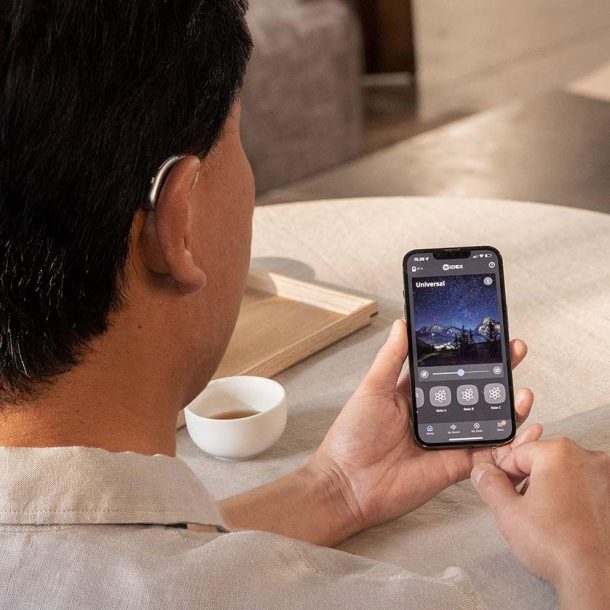
4. Hearing Aid Smartphone Apps

A smartphone app can turn a compatible phone into a convenient control centre for hearing aids.

Depending on the manufacturer and hearing aid model, an app may allow users to:

  • Adjust volume
  • Change listening programs
  • Control streaming
  • Monitor battery status
  • Personalise sound
  • Adjust certain hearing settings
  • Manage connected accessories
  • Access remote support features

Signia describes its app as a way to personalise the hearing experience, while compatible Phonak hearing aids can connect with the myPhonak app for personalisation and other functions.

Why Hearing Aid Apps Are Useful

Physical buttons are not always convenient. A smartphone can provide a familiar interface with larger controls and additional settings.

For example, we may use one hearing program while sitting quietly at home and another when entering a busy public environment. If the hearing aid supports program changes through its app, the adjustment can be made discreetly.

However, an app should complement professional hearing aid programming rather than encourage users to make major changes without appropriate guidance.


5. Hearing Aid Remote Controls

Not everyone wants to control hearing aids through a smartphone.

A hearing aid remote control provides an alternative for users who prefer physical buttons or who do not regularly use smartphones.

Depending on the model, a remote control can provide functions such as:

  • Volume adjustment
  • Program selection
  • Streaming control
  • Basic hearing aid management

Phonak’s RemoteControl, for example, provides dedicated buttons for volume and program changes and is designed for compatible Phonak hearing aids.

Who May Prefer a Physical Remote?

A remote control can be useful for:

  • People who prefer simple physical controls
  • Users who do not carry a smartphone regularly
  • People who find smartphone apps difficult to navigate
  • Individuals who want discreet adjustment
  • Users who want to avoid opening an app for basic changes

The important point is simplicity. The best control system is one that we can operate comfortably without interrupting a conversation or daily activity.


6. Hearing Aid Chargers and Portable Charging Cases

Rechargeable hearing aids have made charging accessories increasingly important.

A modern hearing aid charging case may serve several purposes. Depending on the model, it can charge the hearing aids when placed inside the case and provide a convenient way to transport them safely.

Some charging solutions are designed specifically for travel, while others remain permanently connected to a power source at home.

Phonak, for example, offers charging solutions for rechargeable hearing aids, including cases designed to charge, dry and protect compatible devices.

What Makes a Good Hearing Aid Charger?

We should consider:

  • Charging time
  • Number of charges available without mains power
  • Portability
  • USB or mains compatibility
  • Indicator lights
  • Ease of inserting the hearing aids
  • Compatibility with the specific hearing aid model
  • Protection during transport

For people who travel frequently, a portable charger can be particularly convenient because it reduces dependence on finding a power outlet immediately.


7. Hearing Aid Cleaning Kits

Regular cleaning is one of the simplest ways to support reliable hearing aid performance.

A typical hearing aid cleaning kit may contain:

  • Soft cleaning brushes
  • Wax removal tools
  • Cleaning wipes
  • Vent cleaning tools
  • Filter-changing tools
  • Drying accessories

The precise kit varies according to hearing aid style.

Signia recommends regular cleaning to reduce problems associated with earwax, dust and moisture, while Phonak provides dedicated care and cleaning products for different hearing aid configurations.

A Simple Daily Cleaning Routine

A basic routine can include:

  1. Remove the hearing aids carefully.
  2. Inspect the earpiece and sound outlet.
  3. Wipe the external surfaces with a soft, dry cloth.
  4. Check for visible earwax or debris.
  5. Inspect the wax filter.
  6. Check the microphone openings.
  7. Store the devices appropriately when they are not being worn.

The manufacturer’s instructions should always take priority because cleaning procedures differ between hearing aid designs.


8. Wax Guards and Wax Filters

Hearing aid wax guards are small protective components designed to help prevent earwax from reaching sensitive parts of the hearing aid.

Earwax accumulation can obstruct the sound outlet or affect acoustic performance. A blocked filter may contribute to reduced sound output or changes in sound quality.

Oticon recommends replacing wax filters when they become clogged or when the hearing aid sounds unusual, with the specific replacement schedule depending on the device and manufacturer’s instructions.

We should never assume that all wax filters are interchangeable.

The replacement filter must match the hearing aid system.

Signs a Wax Filter May Need Attention

Possible signs include:

  • Reduced volume
  • Muffled sound
  • Intermittent sound
  • Distorted sound
  • A hearing aid that suddenly seems quieter than the other
  • Visible wax blockage

If changing the filter does not resolve the problem, professional inspection is appropriate.


9. Hearing Aid Domes, Ear Tips and Earpieces

Domes and ear tips are small components, but they have an important role in the physical interface between the hearing aid and ear.

Depending on the hearing aid style, we may use:

  • Open domes
  • Closed domes
  • Power domes
  • Sleeves
  • Custom earmoulds
  • Custom shells
  • Different sizes of ear tips

The correct component can affect comfort, acoustic coupling and the way the hearing aid sits in the ear.

Some manufacturers have introduced specialised dome designs intended to simplify wax management. Phonak’s EasyGuard, for example, uses a sealed membrane design intended to protect the receiver from earwax and simplify cleaning on compatible systems.

When Should Domes Be Replaced?

Replacement schedules vary by material, usage and manufacturer recommendations.

We should consider replacement when the dome:

  • Becomes damaged
  • Loses its shape
  • Becomes hardened or discoloured
  • No longer fits securely
  • Is visibly contaminated
  • Causes discomfort
  • Is no longer providing the expected acoustic seal

A hearing care professional can also determine whether the current dome remains appropriate for the hearing loss and hearing aid configuration.


10. Hearing Aid Dryers and Dehumidifiers

Moisture is an important consideration for hearing aid maintenance.

Hearing aids are exposed to moisture from:

  • Sweat
  • Humidity
  • Rain
  • Condensation
  • Everyday environmental exposure
  • Physical activity

A hearing aid dryer or dehumidifier can provide a dedicated storage environment for removing moisture.

Phonak recommends drying solutions as part of hearing aid care, and Widex offers dedicated drying systems such as PerfectDry Lux for compatible hearing aids.

Oticon also advises users to protect hearing aids from moisture and provides guidance on using hearing aid dryers.

Drying Is Particularly Relevant in Humid Conditions

People living in humid climates or those who exercise regularly may need to pay closer attention to moisture management.

However, we should never use improvised heating methods such as ovens, microwaves or excessive direct heat. Manufacturer-specific instructions should always be followed.


11. Protective Cases for Hearing Aids

A protective case is one of the simplest hearing aid accessories to own.

When hearing aids are not being worn, a case can help protect them against:

  • Accidental drops
  • Dust
  • Crushing
  • Misplacement
  • Contact with other objects
  • Children or pets

A case becomes particularly useful while travelling.

We can keep the hearing aids, spare wax filters, cleaning tools and other small accessories together instead of carrying each item separately.

For rechargeable hearing aids, a charging case may combine several of these functions.


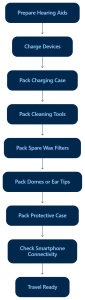
12. Hearing Aid Accessories for Travel

Travel creates a different set of hearing aid requirements.

A useful travel kit can include:

  • Hearing aid charging case
  • Spare charger or charging cable
  • Cleaning brush
  • Wax filters
  • Spare domes or ear tips
  • Protective case
  • Drying solution
  • Batteries, where applicable
  • Manufacturer-specific accessories
  • Smartphone and charging equipment

Before travelling, we should check that the hearing aids are functioning normally and that all accessories are compatible.

A Practical Travel Checklist

For longer journeys, it is sensible to carry essential consumables rather than assuming replacements will be immediately available at the destination.

13. Hearing Aid Accessories for Active Lifestyles

People who exercise, work outdoors or spend significant time in humid environments may need to pay additional attention to moisture and physical protection.

A useful accessory combination may include:

  • Hearing aid dryer
  • Protective case
  • Cleaning kit
  • Spare earpieces
  • Portable charger
  • Manufacturer-approved moisture management products

Hearing aids should also be removed when required by the manufacturer’s instructions, particularly around activities involving significant water exposure.

Water resistance does not mean that a hearing aid is suitable for swimming or unrestricted submersion.

14. Choosing Hearing Aid Accessories by Lifestyle

The most practical way to choose accessories is to begin with the situations that cause the greatest difficulty.

Everyday situation Useful accessory
Difficult conversations in restaurants Remote microphone
Watching television with family TV streamer
Frequent smartphone calls Bluetooth connectivity
Music and podcast streaming Bluetooth-compatible accessories
Difficulty controlling hearing aids Smartphone app or remote control
Frequent travel Portable charger and protective case
Heavy sweating or humid climate Hearing aid dryer/dehumidifier
Frequent earwax accumulation Wax filters and suitable domes
Daily maintenance Cleaning kit
Active outdoor lifestyle Protective case and drying solution

This approach prevents unnecessary purchases. We do not need every accessory simply because it is available.

Hearing Aid Accessories and Compatibility: What We Need to Check

Compatibility is one of the most important considerations before purchasing any hearing aid accessory.

Two devices may both advertise Bluetooth connectivity but still have different compatibility requirements.

Before purchasing, we should verify:

Hearing Aid Model

The exact model number matters. Accessories are often designed for specific generations or product families.

Manufacturer

Phonak, Signia, Oticon, Widex, ReSound and other manufacturers use different accessory ecosystems.

Smartphone

The smartphone operating system and model can affect streaming and app functionality.

Connectivity Technology

Bluetooth Classic, Bluetooth Low Energy and Bluetooth LE Audio can provide different capabilities.

Hearing Aid Firmware

Some functionality may depend on software or firmware versions.

Hearing Aid Style

Receiver-in-canal, behind-the-ear and custom hearing aids may use different consumables and accessories.

Professional Programming

Some accessories may require pairing, programming or configuration by a hearing care professional.

Hearing Aid Accessories: What Should We Avoid?

Not every accessory advertised online is appropriate for every hearing aid.

We should be cautious about:

  • Generic filters that do not match the hearing aid
  • Unverified chargers
  • Non-compatible domes
  • Harsh household cleaning chemicals
  • Excessive heat
  • Improvised drying methods
  • Accessories with unclear compatibility information
  • Poor-quality replacement components

Manufacturers specifically recommend using appropriate cleaning products and avoiding harsh chemicals. Phonak, for example, advises against alcohol, solvents and other harsh cleaning agents for its hearing aid cleaning routine.

Hearing Aid Accessories and Maintenance: A Simple Routine

A consistent maintenance routine does not need to be complicated.

Every Day

Inspect the hearing aids and remove visible debris with an appropriate soft, dry cleaning method.

Regularly

Check the wax filter, dome or earpiece for blockage or damage.

As Recommended

Replace wax guards, domes and other consumable components according to the manufacturer’s instructions.

During Travel

Keep the hearing aids protected in a suitable case and carry essential accessories.

When Exposed to Moisture

Use an approved drying solution according to the manufacturer’s instructions.

When Performance Changes

Do not immediately assume that the hearing aid itself has failed. A blocked wax filter, damaged dome, moisture exposure, connectivity issue or depleted battery can sometimes cause noticeable changes.

Signia specifically notes that regular cleaning can help prevent blockages, feedback and damage associated with earwax, dust or moisture.

Can Hearing Aid Accessories Improve Hearing?

Accessories can improve the listening experience in particular situations, but they do not cure hearing loss.

For example, a remote microphone may make it easier to follow a speaker at a distance. A TV streamer may provide direct television audio. A smartphone connection may make telephone communication more convenient.

The underlying hearing aid fitting still matters.

If speech remains unclear even when using an appropriate accessory, the hearing aids may need:

  • Cleaning
  • Wax-filter replacement
  • Dome replacement
  • Reprogramming
  • Connectivity troubleshooting
  • Physical inspection
  • Hearing reassessment

Accessories work best when they are integrated into an appropriately fitted hearing solution.

How to Choose the Best Hearing Aid Accessories

Rather than selecting accessories based solely on features, we should match them to our actual listening routine.

Step 1: Identify the Most Difficult Situation

Is the biggest problem conversation in noise, television, phone calls, travel or maintenance?

Step 2: Check Hearing Aid Compatibility

Identify the exact hearing aid model before purchasing anything.

Step 3: Consider Frequency of Use

An accessory used every day may justify a different choice from one needed only during occasional travel.

Step 4: Prioritise Simplicity

An accessory is only useful if we can operate it comfortably.

Step 5: Consider Professional Support

A hearing care professional can confirm compatibility and help configure accessories correctly.

Step 6: Replace Consumables Correctly

Filters, domes and other components should be matched to the hearing aid rather than selected purely on appearance or price.

Frequently Asked Questions About Hearing Aid Accessories

What is the most useful hearing aid accessory?

There is no single accessory that is appropriate for everyone. A remote microphone may be particularly useful for conversations in noise, while a TV streamer may be more relevant to someone who regularly struggles with television dialogue. A charger, cleaning kit or drying system may be more important for someone focused on daily device care.

Do all hearing aids work with Bluetooth accessories?

No. Bluetooth functionality and accessory compatibility vary between hearing aid models and manufacturers. We should confirm the exact compatibility requirements before purchasing an accessory.

Do hearing aid users need a remote microphone?

Not necessarily. A remote microphone is an additional tool for situations where distance, background noise or competing speakers make communication difficult.

Are hearing aid cleaning kits necessary?

A basic cleaning routine is important, although the exact tools required depend on the hearing aid design. Manufacturers provide model-specific cleaning instructions.

How often should hearing aid wax filters be changed?

There is no universal replacement interval for every hearing aid. Some manufacturers provide specific schedules, while filters may also need replacement sooner if they become clogged or sound quality changes. Oticon, for example, advises replacement when clogged or when the hearing aid sounds unusual and provides a model-specific maintenance schedule.

Can a hearing aid dryer damage hearing aids?

An approved hearing aid drying system used according to its manufacturer’s instructions is designed for hearing aid care. Improvised high-heat drying methods should be avoided because excessive heat can damage electronic components.

Can hearing aids connect directly to a TV?

Some hearing aids can connect directly or through compatible Bluetooth technology, while others require a dedicated TV streaming accessory. The answer depends on the hearing aid model and television connectivity.

Are hearing aid apps better than remote controls?

They serve different preferences. An app may provide more features and personalisation, while a physical remote can be simpler for users who prefer dedicated buttons. The appropriate option depends on the hearing aid system and the user’s comfort with technology.

A Practical Hearing Aid Accessory Kit

For many users, a sensible accessory collection can be built around a few core needs rather than purchasing everything available.

Essential Care

  • Soft cleaning cloth
  • Manufacturer-approved cleaning tools
  • Correct wax filters
  • Compatible domes or ear tips
  • Protective storage case

Connectivity

  • Smartphone app
  • Bluetooth accessory where required
  • TV streamer if television listening is difficult
  • Remote microphone for challenging conversations

Protection

  • Charging case
  • Portable charger
  • Hearing aid dryer or dehumidifier where appropriate

This gives us a practical foundation while leaving room to add specialised accessories when a particular listening situation demands them.

Hearing Aid Accessories at Soundrich Hearing

At Soundrich Hearing, accessory selection can be considered alongside the hearing aid itself rather than as a separate purchase. This is particularly important when choosing Bluetooth accessories, TV streamers, remote microphones, chargers, domes and maintenance components because compatibility varies between hearing aid models.

Professional guidance can help us determine whether an accessory addresses an actual listening challenge and whether it is compatible with the hearing aids being used. A hearing care professional can also assist with fitting, programming, pairing, cleaning guidance and ongoing maintenance.

For users exploring modern digital, Bluetooth and rechargeable hearing aids, the right combination of hearing aid technology and accessories can provide a more practical solution for conversations, entertainment, phone calls, travel and everyday device care.

Final Considerations When Buying Hearing Aid Accessories

The modern hearing aid is no longer an isolated device. It can form part of a connected listening system involving smartphones, televisions, microphones, chargers, apps and specialised maintenance equipment.

The most useful accessory is the one that solves a real problem.

If conversations are difficult in restaurants, a remote microphone may deserve attention. If television dialogue is consistently unclear, a TV streamer may be more relevant. If smartphone calls are the main challenge, compatible Bluetooth connectivity may be the priority. If device reliability is the concern, cleaning, wax protection and moisture management should receive greater attention.

Before purchasing, we should identify the hearing aid’s exact model, confirm accessory compatibility and follow manufacturer-specific care instructions. With the right combination of hearing technology, accessories and professional support, everyday hearing can become considerably more manageable across the situations that matter most.


Leave A Reply Cancel reply

Your email address will not be published. Required fields are marked *

*

*

Best Hearing Aids for Android in India: Bluetooth Compatibility, Brands, Features and Buying Guide
Previous Article
  • Archives

    • September 2026
    • August 2026
    • July 2026
    • June 2026
    • May 2026
    • April 2026
    • March 2026
    • February 2026
    • January 2026
    • December 2025
    • November 2025
    • October 2025
    • September 2025
    • August 2025
    • July 2025
    • June 2025
    • May 2025
    • April 2025
    • March 2025
    • February 2025
    • January 2025
    • December 2024
    • November 2024
    • October 2024
    • September 2024
    • August 2024
    • July 2024
    • June 2024
    • May 2024
    • April 2024
    • March 2024
    • February 2024
    • January 2024
    • December 2023
    • November 2023
    • October 2023
    • September 2023
    • August 2023
    • July 2023
    • April 2023
    • March 2023
    • February 2023
    • January 2023
    • December 2022
    • October 2022
    • April 2019


Request Appointment

If you're struggling to hear, don't wait any longer. Request an appointment for sound aid hearing today and get the help you need.
Get In Touch

We help our clients hear again

We are driven by the values of customer centricity and integrity. We will always have your best interests in our heart while dealing with you.

Read More
Facebook Instagram Linkedin Google

Explore

Home
About Us
Product
Services
Learn
Centre Location
Contact

Other Links

Disclaimer
Privacy Policy
Terms of Service

Soundrich Hearing Pvt. Ltd.

Dwarka

Flat No. 63, Ground Floor,
Sunview Apartment, Pocket-4,
Sector-11, Dwarka,
New Delhi – 110075

Uttam Nagar

info@soundrichhearing.com

E-9, Flat No. – 101,
Om Vihar Extension, Uttam Nagar,
Delhi – 110059

Janakpuri

Shop No. 1/105, Block C4E,
Near C4E Bus Stop,
Janakpuri,
New Delhi – 110058

Copyright 2026 to Soundrich Hearing All Right Reserved | Designed & Developed By Soundrich Hearing