

• Home
  • About us
  • Product
  • Services
    • Hearing Aid Dealer in Delhi
      • Digital Hearing Aids In Dwarka
      • Hearing Test In Dwarka
      • Hearing Aid Fitting In Dwarka
      • Audiologist In Dwarka
    • Hearing Aid in Noida
    • Hearing Aid Centre Greater Noida
    • Hearing Aid Centre Ghaziabad
    • Hearing Aid Centre Gurugram
    • Hearing Aid Centre Faridabad
    • Best Hearing Aids Mumbai
    • Best Hearing Aids Patna
    • Best Hearing Aids Chandigrah
    • Best Hearing Aids Varanasi
    • Best Hearing Aids Meerut
  • Hearing Aids
    • Signia Hearing Aid
    • Phonak Hearing Aid
    • Oticon Hearing Aid
    • Resound Hearing Aid
    • Widex Hearing Aid
  • Blog
  • Our Centre Location
  • Contact Us
  • +91 98112 24051/ 98112 24059
  • info@soundrichhearing.com
  • Mon-Sat 10am - 7.30pm
Request Appointment
Asset-2
  • Home
  • About us
  • Product
  • Services
    • Hearing Aid Dealer in Delhi
      • Digital Hearing Aids In Dwarka
      • Hearing Test In Dwarka
      • Hearing Aid Fitting In Dwarka
      • Audiologist In Dwarka
    • Hearing Aid in Noida
    • Hearing Aid Centre Greater Noida
    • Hearing Aid Centre Ghaziabad
    • Hearing Aid Centre Gurugram
    • Hearing Aid Centre Faridabad
    • Best Hearing Aids Mumbai
    • Best Hearing Aids Patna
    • Best Hearing Aids Chandigrah
    • Best Hearing Aids Varanasi
    • Best Hearing Aids Meerut
  • Hearing Aids
    • Signia Hearing Aid
    • Phonak Hearing Aid
    • Oticon Hearing Aid
    • Resound Hearing Aid
    • Widex Hearing Aid
  • Blog
  • Our Centre Location
  • Contact Us
  • Home
  • About us
  • Product
  • Services
    • Hearing Aid Dealer in Delhi
      • Digital Hearing Aids In Dwarka
      • Hearing Test In Dwarka
      • Hearing Aid Fitting In Dwarka
      • Audiologist In Dwarka
    • Hearing Aid in Noida
    • Hearing Aid Centre Greater Noida
    • Hearing Aid Centre Ghaziabad
    • Hearing Aid Centre Gurugram
    • Hearing Aid Centre Faridabad
    • Best Hearing Aids Mumbai
    • Best Hearing Aids Patna
    • Best Hearing Aids Chandigrah
    • Best Hearing Aids Varanasi
    • Best Hearing Aids Meerut
  • Hearing Aids
    • Signia Hearing Aid
    • Phonak Hearing Aid
    • Oticon Hearing Aid
    • Resound Hearing Aid
    • Widex Hearing Aid
  • Blog
  • Our Centre Location
  • Contact Us
Asset-2
  • Home
  • About us
  • Product
  • Services
    • Hearing Aid Dealer in Delhi
      • Digital Hearing Aids In Dwarka
      • Hearing Test In Dwarka
      • Hearing Aid Fitting In Dwarka
      • Audiologist In Dwarka
    • Hearing Aid in Noida
    • Hearing Aid Centre Greater Noida
    • Hearing Aid Centre Ghaziabad
    • Hearing Aid Centre Gurugram
    • Hearing Aid Centre Faridabad
    • Best Hearing Aids Mumbai
    • Best Hearing Aids Patna
    • Best Hearing Aids Chandigrah
    • Best Hearing Aids Varanasi
    • Best Hearing Aids Meerut
  • Hearing Aids
    • Signia Hearing Aid
    • Phonak Hearing Aid
    • Oticon Hearing Aid
    • Resound Hearing Aid
    • Widex Hearing Aid
  • Blog
  • Our Centre Location
  • Contact Us
  • Home
  • About us
  • Product
  • Services
    • Hearing Aid Dealer in Delhi
      • Digital Hearing Aids In Dwarka
      • Hearing Test In Dwarka
      • Hearing Aid Fitting In Dwarka
      • Audiologist In Dwarka
    • Hearing Aid in Noida
    • Hearing Aid Centre Greater Noida
    • Hearing Aid Centre Ghaziabad
    • Hearing Aid Centre Gurugram
    • Hearing Aid Centre Faridabad
    • Best Hearing Aids Mumbai
    • Best Hearing Aids Patna
    • Best Hearing Aids Chandigrah
    • Best Hearing Aids Varanasi
    • Best Hearing Aids Meerut
  • Hearing Aids
    • Signia Hearing Aid
    • Phonak Hearing Aid
    • Oticon Hearing Aid
    • Resound Hearing Aid
    • Widex Hearing Aid
  • Blog
  • Our Centre Location
  • Contact Us
Hearing Aid

Easy-to-Use Hearing Aids: Features That Make Everyday Hearing Simpler

By Soundrich Hearing 

We choose hearing aids to improve communication, not to add another complicated device to our daily routine. The best hearing aids are comfortable to wear, straightforward to operate, and capable of helping us hear speech more clearly in the places where we spend our time.

Whether we are buying our first hearing aids, replacing an older pair, or looking for a more convenient hearing experience, we can make a better decision by focusing on practical features rather than technical specifications alone. A hearing aid should fit our ears, suit our hearing needs, and work naturally with our lifestyle.

What Makes Hearing Aids Easy to Use?

An easy-to-use hearing aid combines several everyday benefits:

  • A comfortable fit that we can wear for extended periods.

  • Automatic sound adjustments that reduce the need for constant manual changes.

  • Simple controls that are easy to understand.

  • Rechargeable power or dependable battery management.

  • Smartphone connectivity for convenient adjustments and streaming.

  • Reliable professional support when we need help with fitting, maintenance, or programming.

These features work together. A hearing aid may have impressive technology, but if it is uncomfortable, difficult to operate, or poorly adjusted, it may not provide the experience we expect.

1. Comfortable Hearing Aids That Fit Our Ears Properly

Comfort should be one of our first considerations when choosing hearing aids. We wear them close to or inside our ears for much of the day, so even a small fitting problem can become frustrating over time.

Modern hearing aids are available in different styles, including behind-the-ear (BTE), receiver-in-canal (RIC), in-the-ear (ITE), in-the-canal (ITC), and completely-in-canal (CIC) designs. Each style offers different advantages, and the most suitable option depends on our hearing loss, ear anatomy, dexterity, and personal preferences.

Features that improve hearing aid comfort

We should look for:

  • Lightweight construction that does not feel unnecessarily heavy.

  • Soft, flexible domes where appropriate.

  • Custom earmoulds when a more personalised fit is needed.

  • Smooth edges and a secure fit that reduce irritation.

  • Easy insertion and removal without excessive pressure.

  • A suitable size and style that match our ears and comfort preferences.

A hearing aid should feel secure without feeling painfully tight. If we experience soreness, pressure, whistling, or repeated slipping, we should ask our hearing care professional to review the fit rather than simply accepting the discomfort.

Discreet hearing aids and natural-looking designs

Many people want hearing aids that blend naturally with their appearance. Smaller designs, neutral colours, and discreet receiver-in-canal options can help us feel more confident wearing them in social and professional settings.

However, the smallest hearing aid is not automatically the best hearing aid. We should prioritise the combination of comfort, hearing performance, handling, and appearance that works for us.

2. Automatic Hearing Aid Adjustments for Easier Listening

One of the most useful developments in modern hearing aids is the ability to adjust sound automatically. Instead of changing settings every time we move from one environment to another, we can allow the device to respond to changing listening conditions.

For example, we may move from a quiet conversation at home to a busy restaurant, a television programme, or a meeting. Advanced hearing aids can use environmental analysis to adjust their sound processing according to the listening situation. The reference article describes automatic environment detection and AI-assisted adjustments as features intended to support speech clarity and reduce the effort of managing different listening environments.

easy hearing aids

Why automatic sound processing matters

We should look for hearing aids that can help us:

  • Follow conversations without constantly changing the volume.

  • Manage background noise more effectively.

  • Adjust to different acoustic environments.

  • Hear speech more comfortably in everyday situations.

  • Spend less time operating the device manually.

Automatic processing does not mean every situation will sound perfect. Some environments, particularly very noisy ones, remain challenging. Nevertheless, a well-fitted hearing aid with appropriate automatic processing can make everyday listening more manageable.

Hearing aids with simple controls

We do not all want to operate a hearing aid through a smartphone or multiple buttons. Some of us prefer a device that works automatically with minimal intervention.

We should consider whether the controls are:

  • Easy to locate.

  • Simple to understand.

  • Comfortable to operate.

  • Suitable for our eyesight and dexterity.

  • Available when we need to make a quick adjustment.

The right level of control is personal. Some people prefer complete automation, while others appreciate having the option to adjust volume or listening programmes themselves.

3. Rechargeable Hearing Aids for a More Convenient Routine

Rechargeable hearing aids have become an increasingly popular choice for people who want a simpler daily routine. Instead of replacing disposable batteries regularly, we can place our hearing aids in a charging station when we are not wearing them.

This can be especially convenient for people who find small batteries difficult to handle or who do not want to keep spare batteries in different places.

Benefits of rechargeable hearing aids

We may appreciate:

  • Overnight charging as part of our normal routine.

  • Fewer battery changes during the week.

  • A dedicated charging dock that is easy to use.

  • Reduced need to carry spare disposable batteries.

  • A predictable approach to daily power management.

Battery life varies between models and depends on factors such as streaming, listening settings, and usage. The reference article describes rechargeable hearing aids as offering approximately 16–20 hours of daily power for the devices it discusses, but we should always check the manufacturer’s specifications for the model we are considering.

easy hearing aids

What should we check before choosing rechargeable hearing aids?

We should ask:

  1. How long does the hearing aid take to charge?

  2. How many hours of use can we expect from a full charge?

  3. Can we use the hearing aids while they are charging?

  4. What happens if we forget to charge them overnight?

  5. Is the charging case easy to handle?

  6. Is there a backup power option for travel or emergencies?

A rechargeable hearing aid is most useful when its charging routine fits naturally into our lifestyle.

4. Hearing Aid Apps with Clear, Visual Controls

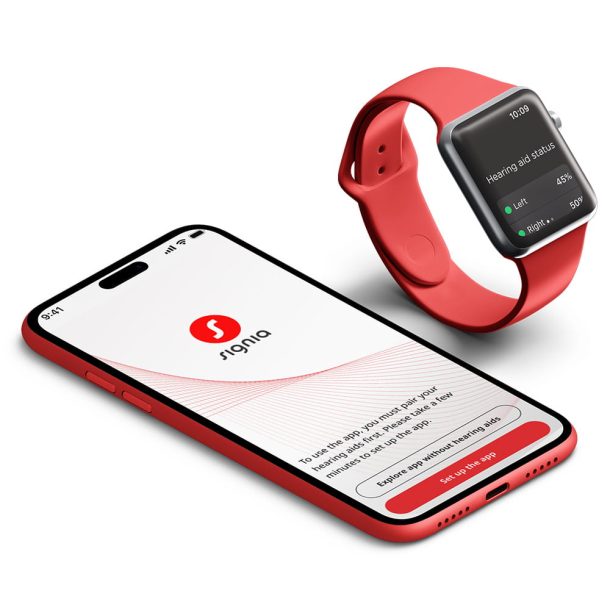
Smartphone apps can make hearing aids easier to manage, particularly for people who prefer visual controls instead of tiny physical buttons.

With a compatible hearing aid app, we may be able to adjust settings from our phone without reaching behind our ears or handling a small device. Common features include volume control, listening programme selection, and battery monitoring.

easy hearing aids

Useful hearing aid app features

We should look for an app that offers:

  • Clear volume controls.

  • Simple programme changes.

  • Battery status information.

  • Easy-to-read menus.

  • A straightforward connection process.

  • Compatibility with our smartphone.

Some apps also offer additional functions, such as remote adjustments, location-based settings, or hearing aid tracking. Availability depends on the hearing aid brand and model.

Are hearing aid apps essential?

Not necessarily. We can choose hearing aids that operate effectively without frequent smartphone use. An app should be a convenience, not a requirement that makes the device more complicated.

If we are not comfortable using smartphone technology, we should ask our hearing care professional to demonstrate the hearing aids without relying on the app.

5. Bluetooth Hearing Aids for Calls, Music, and Television

Bluetooth connectivity can make hearing aids more useful in everyday life. Compatible hearing aids can connect with smartphones and other devices, allowing us to hear certain audio directly through our hearing aids.

Depending on the model, we may use Bluetooth for:

  • Phone calls.

  • Music.

  • Podcasts.

  • Television audio.

  • Video calls.

  • Other compatible audio devices.

This can reduce the need to hold a phone close to our ear or turn the television volume up excessively.

What should we know about Bluetooth hearing aids?

Bluetooth performance varies between hearing aids and smartphones. We should check:

  • Whether the hearing aid supports our phone.

  • Whether both ears can receive streamed audio.

  • Whether the connection is stable.

  • Whether streaming affects battery life.

  • Whether we can answer calls conveniently.

  • Whether the hearing aid supports the audio features we actually use.

We should also remember that Bluetooth connectivity and hearing performance are not the same thing. A hearing aid must still be appropriately fitted and programmed for our hearing needs.

6. Easy-to-Handle Hearing Aids for Everyday Independence

A hearing aid can be technologically advanced and still be difficult to use if its physical controls are too small or awkward. We should consider how easily we can handle the device ourselves.

This is particularly important if we have reduced finger dexterity, arthritis, limited eyesight, or difficulty remembering complicated operating steps.

Handling features worth considering

We should look for:

  • A charging dock that is easy to place the hearing aids into.

  • Clearly identifiable left and right devices.

  • Simple on/off controls.

  • Easy-to-open battery compartments, if applicable.

  • Buttons that are easy to locate.

  • A shape that is comfortable to hold.

  • A fitting style that does not require excessive force.

During a hearing aid demonstration, we should practise putting the devices on, removing them, and placing them in the charger. We should also ask for a demonstration of cleaning and basic maintenance.

7. Hearing Aids That Support Clear Speech in Everyday Environments

The purpose of hearing aids is not simply to make sounds louder. We want to hear speech more clearly and participate more comfortably in conversations.

Different environments create different listening challenges. A quiet room may be relatively easy, while a restaurant, family gathering, or busy workplace can be much more demanding.

Situations where we should evaluate hearing aid performance

We should consider how the hearing aids perform when we are:

  • Speaking with one person.

  • Participating in a family conversation.

  • Sitting in a restaurant.

  • Watching television.

  • Attending meetings.

  • Shopping in a busy environment.

  • Listening to someone from another room.

  • Spending time outdoors.

We should tell our hearing care professional about the situations that matter most to us. A hearing aid fitting should reflect our real-life listening needs, not just the results of a hearing test.

8. Hearing Aid Programmes That Match Our Lifestyle

Some hearing aids offer multiple listening programmes designed for different environments. These may include settings for quiet conversations, noisy surroundings, music, or television.

We should not assume that more programmes automatically mean a better hearing aid. The important question is whether the available settings are useful and easy for us to access.

How to choose useful hearing aid programmes

We should ask:

  • Which programmes are included?

  • Can the hearing aids change programmes automatically?

  • Can we change them through a physical button?

  • Can we change them through a smartphone app?

  • Can our hearing care professional adjust them to suit our preferences?

A simple, well-programmed hearing aid may be more useful than a complicated device with features we never use.

9. Professional Fitting and Follow-Up Care

Even the most advanced hearing aids need to be fitted and adjusted properly. Professional support is an essential part of choosing a device that remains comfortable and effective over time.

We should expect our hearing care provider to help with:

  • Hearing assessment.

  • Hearing aid selection.

  • Initial fitting.

  • Programming and adjustments.

  • Comfort checks.

  • Cleaning and maintenance.

  • Troubleshooting.

  • Ongoing hearing monitoring.

The reference article also highlights professional cleaning, device checks, firmware updates, and regular hearing tests as important parts of maintaining hearing aids over time.

easy hearing aids

Why follow-up appointments matter

Our hearing needs may change, and our experience with hearing aids may evolve as we become more familiar with them. Follow-up appointments give us an opportunity to explain what is working well and what needs improvement.

For example, we may discover that:

  • Speech sounds too sharp.

  • Background noise is distracting.

  • The hearing aids feel uncomfortable.

  • We need help with the app.

  • The volume is not suitable in certain environments.

  • We need a different earmould or dome.

  • The device needs cleaning or repair.

These are practical concerns that should be addressed rather than ignored.

10. Hearing Aid Maintenance That Is Easy to Manage

A simple maintenance routine can help us keep our hearing aids working reliably. We should learn how to clean the parts that our hearing care professional recommends cleaning at home and understand when professional servicing is needed.

Everyday hearing aid care

We should:

  • Keep hearing aids away from excessive moisture.

  • Store them safely when not in use.

  • Clean them according to the manufacturer’s instructions.

  • Check the charging contacts regularly.

  • Keep microphones and sound outlets clear.

  • Replace or clean filters when advised.

  • Avoid using unsuitable cleaning products.

  • Seek professional help if the device is not working properly.

We should also ask whether the hearing aids are designed to handle our normal environment, including humidity, perspiration, or occasional exposure to moisture.

11. Hearing Aids with a Trial Period

A trial period can be valuable because we need time to experience hearing aids in our own daily environments. A short demonstration in a clinic cannot fully replicate a week of conversations, television watching, shopping, or family gatherings.

We should ask about:

  • The length of the trial period.

  • Whether adjustments are included.

  • Whether the trial includes follow-up appointments.

  • What happens if the hearing aids do not meet our needs.

  • Any return conditions or fees.

The reference article notes that trial arrangements and terms can vary, so we should confirm the specific conditions with the provider before making a purchase.

easy hearing aids

12. Choosing Hearing Aids for First-Time Users

First-time users often benefit from a straightforward hearing aid experience. We do not need to master every feature immediately. We need to understand the basics and feel comfortable using the devices.

What we should learn during our first fitting

We should ask our hearing care professional to demonstrate:

  1. How to insert and remove the hearing aids.

  2. How to identify the left and right devices.

  3. How to charge or replace the batteries.

  4. How to adjust the volume.

  5. How to change listening programmes.

  6. How to connect the hearing aids to a smartphone.

  7. How to clean the devices.

  8. What to do if the hearing aids whistle or stop working.

  9. When to schedule a follow-up appointment.

We should also ask for written instructions or a practical demonstration that we can repeat at home.

13. Choosing Hearing Aids for Older Adults

Older adults may have different priorities when choosing hearing aids. Some people prefer small, discreet devices, while others value larger controls that are easier to handle.

We should consider:

  • Ease of insertion and removal.

  • Battery or charging convenience.

  • Physical button size.

  • Smartphone compatibility.

  • Visual clarity of the app.

  • Comfort during extended wear.

  • Availability of local professional support.

  • Help with maintenance and troubleshooting.

The best hearing aid is not necessarily the one with the most features. It is the one that we can use confidently and consistently.

14. Hearing Aids for Busy Workplaces and Social Situations

For people who work, attend meetings, or regularly socialise, hearing aids should support communication in a range of environments.

We should think about where we spend the most time:

  • Offices.

  • Meeting rooms.

  • Restaurants.

  • Places of worship.

  • Family gatherings.

  • Public transport.

  • Outdoor events.

  • Shops and busy public spaces.

We should discuss these situations during our hearing assessment and ask whether the hearing aids can be programmed to suit them.

15. Hearing Aids That Are Easy to Use When Travelling

Travel can introduce new challenges, particularly when we are away from our usual hearing care provider.

We should consider:

  • Battery life.

  • Charging options.

  • Whether we can carry a spare charger.

  • Whether the hearing aids are compatible with our phone.

  • Whether we can manage basic maintenance ourselves.

  • Whether the provider offers support if we experience problems.

A simple charging routine and a small care kit can help us avoid unnecessary disruption while travelling.

How to Compare Easy-to-Use Hearing Aids

When comparing hearing aids, we should focus on the features that will make the biggest difference to our daily lives.

Feature

What we should look for

Comfort

A secure, comfortable fit that we can wear for extended periods

Automatic adjustments

Sound processing that responds to changing environments

Rechargeable power

A charging routine that suits our lifestyle

App support

Clear, simple controls and useful battery information

Bluetooth

Compatibility with our smartphone and preferred devices

Handling

Controls and charging options that are easy to manage

Speech clarity

Performance that supports our most important listening situations

Professional support

Fitting, programming, maintenance, and follow-up care

Trial period

Time to experience the hearing aids in everyday environments

A Practical Way to Choose the Right Hearing Aids

We can make the selection process easier by following a few practical steps.

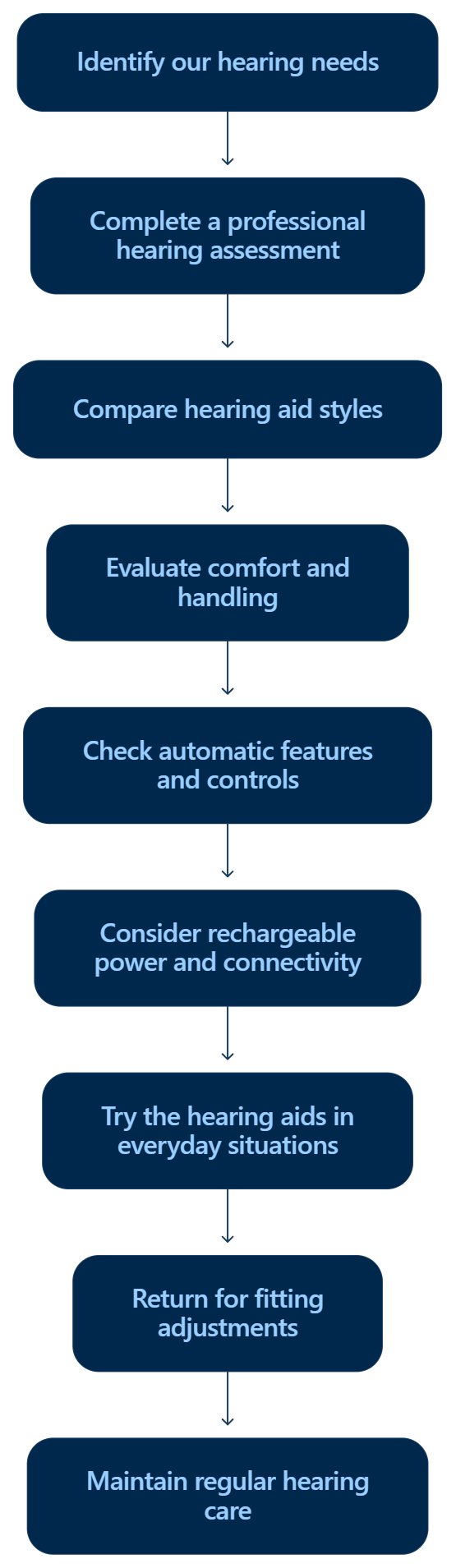
Step 1: Identify our everyday listening needs

We should think about where we struggle most. Is it conversation in a quiet room, background noise, television, meetings, or family gatherings?

Step 2: Have a professional hearing assessment

A hearing assessment helps determine the type and degree of hearing loss and provides a foundation for choosing suitable hearing aids.

Step 3: Compare hearing aid styles

We should compare behind-the-ear, receiver-in-canal, and in-the-ear options based on comfort, handling, appearance, and hearing needs.

Step 4: Test the features we actually need

We should ask for a demonstration of automatic adjustments, charging, Bluetooth, and app controls. We should focus on practical use rather than simply counting features.

Step 5: Practise using the hearing aids

We should insert and remove the devices, place them in the charger, adjust the volume, and connect them to our phone before taking them home.

Step 6: Use the hearing aids in real-life situations

We should try them in the environments that matter most to us and make a note of any difficulties.

Step 7: Return for adjustments

We should share our experience with our hearing care professional so the fitting can be refined.

Easy-to-Use Hearing Aids: A Simple Decision Framework

Common Mistakes to Avoid When Choosing Hearing Aids

Choosing only by appearance

A discreet hearing aid can be attractive, but we should also consider comfort, handling, and hearing performance.

Assuming the most expensive model is the easiest to use

Price does not automatically determine how convenient a hearing aid will be for us. We should compare the features that match our needs.

Ignoring comfort problems

If a hearing aid causes soreness or repeated discomfort, we should ask for a fitting review.

Buying without understanding the controls

We should make sure we can operate the hearing aids confidently before taking them home.

Forgetting about follow-up care

We should choose a provider who can help with adjustments, maintenance, and future hearing needs.

Why Professional Guidance Makes Hearing Aids Easier

Choosing hearing aids is not simply about selecting a device from a list of specifications. We need a solution that works for our hearing, our ears, and our daily routine.

A professional hearing care provider can help us understand the available options, demonstrate the controls, and make adjustments based on our experience. This support can be particularly valuable when we are new to hearing aids or when we are moving from an older device to a more advanced model.

Finding Hearing Aids That Fit Our Everyday Life

The best easy-to-use hearing aids are the ones that help us spend less time thinking about the device and more time enjoying conversations, music, television, and everyday activities.

We should look for a combination of comfort, simple controls, automatic sound processing, rechargeable convenience, useful connectivity, and dependable professional support. We should also give ourselves time to become familiar with the hearing aids and ask for adjustments whenever something does not feel right.

At Soundrich Hearing, we can explore hearing aid options from leading brands, including Signia, Phonak, Oticon, Widex, and ReSound, with professional guidance to help us find a suitable solution. We can also ask about hearing tests, fitting, programming, and ongoing support.

Ready to find hearing aids that are comfortable, practical, and easy to use? Explore hearing aids and hearing care at Soundrich Hearing  or contact us to discuss our hearing needs and arrange a professional hearing assessment.

Hearing aids are intended to help manage hearing loss and do not restore normal hearing. A professional hearing assessment is recommended before choosing a hearing aid.


Leave A Reply Cancel reply

Your email address will not be published. Required fields are marked *

*

*

Affordable Hearing Aid in Uttam Nagar: Find Clearer Conversations Without Breaking the Bank
Previous Article
  • Archives

    • September 2026
    • August 2026
    • July 2026
    • June 2026
    • May 2026
    • April 2026
    • March 2026
    • February 2026
    • January 2026
    • December 2025
    • November 2025
    • October 2025
    • September 2025
    • August 2025
    • July 2025
    • June 2025
    • May 2025
    • April 2025
    • March 2025
    • February 2025
    • January 2025
    • December 2024
    • November 2024
    • October 2024
    • September 2024
    • August 2024
    • July 2024
    • June 2024
    • May 2024
    • April 2024
    • March 2024
    • February 2024
    • January 2024
    • December 2023
    • November 2023
    • October 2023
    • September 2023
    • August 2023
    • July 2023
    • April 2023
    • March 2023
    • February 2023
    • January 2023
    • December 2022
    • October 2022
    • April 2019


Request Appointment

If you're struggling to hear, don't wait any longer. Request an appointment for sound aid hearing today and get the help you need.
Get In Touch

We help our clients hear again

We are driven by the values of customer centricity and integrity. We will always have your best interests in our heart while dealing with you.

Read More
Facebook Instagram Linkedin Google

Explore

Home
About Us
Product
Services
Learn
Centre Location
Contact

Other Links

Disclaimer
Privacy Policy
Terms of Service

Soundrich Hearing Pvt. Ltd.

Dwarka

Flat No. 63, Ground Floor,
Sunview Apartment, Pocket-4,
Sector-11, Dwarka,
New Delhi – 110075

Uttam Nagar

info@soundrichhearing.com

E-9, Flat No. – 101,
Om Vihar Extension, Uttam Nagar,
Delhi – 110059

Janakpuri

Shop No. 1/105, Block C4E,
Near C4E Bus Stop,
Janakpuri,
New Delhi – 110058

Copyright 2026 to Soundrich Hearing All Right Reserved | Designed & Developed By Soundrich Hearing