
• Home
  • About us
  • Product
  • Services
    • Hearing Aid Dealer in Delhi
      • Digital Hearing Aids In Dwarka
      • Hearing Test In Dwarka
      • Hearing Aid Fitting In Dwarka
      • Audiologist In Dwarka
    • Hearing Aid in Noida
    • Hearing Aid Centre Greater Noida
    • Hearing Aid Centre Ghaziabad
    • Hearing Aid Centre Gurugram
    • Hearing Aid Centre Faridabad
    • Best Hearing Aids Mumbai
    • Best Hearing Aids Patna
    • Best Hearing Aids Chandigrah
    • Best Hearing Aids Varanasi
    • Best Hearing Aids Meerut
  • Hearing Aids
    • Signia Hearing Aid
    • Phonak Hearing Aid
    • Oticon Hearing Aid
    • Resound Hearing Aid
    • Widex Hearing Aid
  • Blog
  • Our Centre Location
  • Contact Us
  • +91 98112 24051/ 98112 24059
  • info@soundrichhearing.com
  • Mon-Sat 10am - 7.30pm
Request Appointment
Asset-2
  • Home
  • About us
  • Product
  • Services
    • Hearing Aid Dealer in Delhi
      • Digital Hearing Aids In Dwarka
      • Hearing Test In Dwarka
      • Hearing Aid Fitting In Dwarka
      • Audiologist In Dwarka
    • Hearing Aid in Noida
    • Hearing Aid Centre Greater Noida
    • Hearing Aid Centre Ghaziabad
    • Hearing Aid Centre Gurugram
    • Hearing Aid Centre Faridabad
    • Best Hearing Aids Mumbai
    • Best Hearing Aids Patna
    • Best Hearing Aids Chandigrah
    • Best Hearing Aids Varanasi
    • Best Hearing Aids Meerut
  • Hearing Aids
    • Signia Hearing Aid
    • Phonak Hearing Aid
    • Oticon Hearing Aid
    • Resound Hearing Aid
    • Widex Hearing Aid
  • Blog
  • Our Centre Location
  • Contact Us
  • Home
  • About us
  • Product
  • Services
    • Hearing Aid Dealer in Delhi
      • Digital Hearing Aids In Dwarka
      • Hearing Test In Dwarka
      • Hearing Aid Fitting In Dwarka
      • Audiologist In Dwarka
    • Hearing Aid in Noida
    • Hearing Aid Centre Greater Noida
    • Hearing Aid Centre Ghaziabad
    • Hearing Aid Centre Gurugram
    • Hearing Aid Centre Faridabad
    • Best Hearing Aids Mumbai
    • Best Hearing Aids Patna
    • Best Hearing Aids Chandigrah
    • Best Hearing Aids Varanasi
    • Best Hearing Aids Meerut
  • Hearing Aids
    • Signia Hearing Aid
    • Phonak Hearing Aid
    • Oticon Hearing Aid
    • Resound Hearing Aid
    • Widex Hearing Aid
  • Blog
  • Our Centre Location
  • Contact Us
Asset-2
  • Home
  • About us
  • Product
  • Services
    • Hearing Aid Dealer in Delhi
      • Digital Hearing Aids In Dwarka
      • Hearing Test In Dwarka
      • Hearing Aid Fitting In Dwarka
      • Audiologist In Dwarka
    • Hearing Aid in Noida
    • Hearing Aid Centre Greater Noida
    • Hearing Aid Centre Ghaziabad
    • Hearing Aid Centre Gurugram
    • Hearing Aid Centre Faridabad
    • Best Hearing Aids Mumbai
    • Best Hearing Aids Patna
    • Best Hearing Aids Chandigrah
    • Best Hearing Aids Varanasi
    • Best Hearing Aids Meerut
  • Hearing Aids
    • Signia Hearing Aid
    • Phonak Hearing Aid
    • Oticon Hearing Aid
    • Resound Hearing Aid
    • Widex Hearing Aid
  • Blog
  • Our Centre Location
  • Contact Us
  • Home
  • About us
  • Product
  • Services
    • Hearing Aid Dealer in Delhi
      • Digital Hearing Aids In Dwarka
      • Hearing Test In Dwarka
      • Hearing Aid Fitting In Dwarka
      • Audiologist In Dwarka
    • Hearing Aid in Noida
    • Hearing Aid Centre Greater Noida
    • Hearing Aid Centre Ghaziabad
    • Hearing Aid Centre Gurugram
    • Hearing Aid Centre Faridabad
    • Best Hearing Aids Mumbai
    • Best Hearing Aids Patna
    • Best Hearing Aids Chandigrah
    • Best Hearing Aids Varanasi
    • Best Hearing Aids Meerut
  • Hearing Aids
    • Signia Hearing Aid
    • Phonak Hearing Aid
    • Oticon Hearing Aid
    • Resound Hearing Aid
    • Widex Hearing Aid
  • Blog
  • Our Centre Location
  • Contact Us
Uncategorized

Hearing Aids for Different Levels of Hearing Loss: Mild, Moderate, Severe & Profound

By Soundrich Hearing 

Hearing loss is not the same for everyone. Some people may struggle to follow conversations in noisy restaurants, while others may have difficulty hearing speech even in quiet surroundings. Because the degree and pattern of hearing loss can vary significantly, choosing a hearing aid should always begin with a professional hearing assessment.

Modern hearing aids are available in different styles, technologies and power levels to support people with mild, moderate, severe and profound hearing loss. The right device depends not only on the hearing-loss level but also on speech understanding, lifestyle, ear anatomy, comfort, connectivity needs and professional recommendations.

Understanding Different Levels of Hearing Loss

Hearing loss is generally classified according to the amount of hearing sensitivity that has been reduced. A hearing test, usually performed with pure-tone audiometry and speech testing, helps determine the degree of hearing loss in each ear.

The main categories include:

  • Mild hearing loss
  • Moderate hearing loss
  • Severe hearing loss
  • Profound hearing loss

The hearing aid recommended for one person may not be suitable for another person with the same hearing-loss category. This is why professional fitting and programming are important.

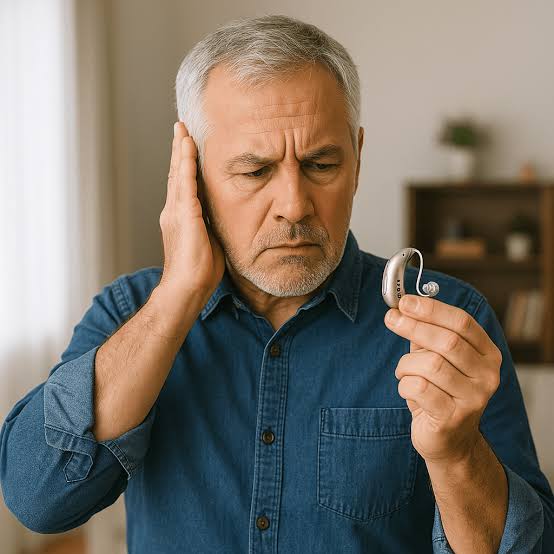
Hearing Loss Worsening This Fall

Hearing Aids for Mild Hearing Loss

People with mild hearing loss may still hear most everyday sounds but can have difficulty understanding speech, particularly when several people are talking or there is background noise.

Common signs of mild hearing loss

A person with mild hearing loss may:

  • Frequently ask others to repeat themselves
  • Find conversations difficult in restaurants
  • Increase the television volume
  • Miss parts of conversations when someone speaks softly
  • Have difficulty hearing children or people speaking from another room
  • Struggle to understand speech in noisy environments

Which hearing aids are suitable?

For mild hearing loss, many people can benefit from small receiver-in-canal (RIC), behind-the-ear (BTE), in-the-ear (ITE), or custom hearing aids, depending on their audiogram and ear anatomy.

Modern hearing aids for mild hearing loss can provide features such as:

  • Automatic environmental adjustment
  • Background-noise management
  • Speech enhancement
  • Bluetooth connectivity
  • Rechargeable batteries
  • Smartphone control
  • Personalised programming

For someone with an active lifestyle, a discreet rechargeable hearing aid with wireless connectivity may be a convenient option.

Hearing Aids for Moderate Hearing Loss

Moderate hearing loss can make everyday communication considerably more challenging. Speech may sound unclear, particularly when the speaker is not facing the listener.

People with moderate hearing loss may find it difficult to:

  • Follow group conversations
  • Hear conversations from a distance
  • Understand speech in noisy places
  • Hear telephone conversations clearly
  • Follow meetings or classroom discussions
  • Hear television at a comfortable volume

Which hearing aids are suitable?

A person with moderate hearing loss may be fitted with RIC, BTE, ITE or other appropriately powered hearing aids.

The hearing aid needs to provide sufficient amplification while keeping sound comfortable and natural. Digital processing can help distinguish speech from background noise and provide appropriate amplification across different frequencies.

For many users, features such as directional microphones, speech enhancement, feedback management and Bluetooth streaming can make daily communication easier.

Hearing Aids for Severe Hearing Loss

Severe hearing loss can significantly affect communication. Without amplification, a person may hear loud sounds but have difficulty understanding normal conversational speech.

Common difficulties include:

  • Missing much of normal conversation
  • Difficulty hearing speech from another room
  • Relying heavily on lip reading
  • Difficulty understanding conversations in groups
  • Missing important sounds such as doorbells or alarms
  • Increasing television volume considerably

Which hearing aids are suitable?

Severe hearing loss generally requires a more powerful hearing aid. Depending on the audiogram, a powerful BTE or appropriately fitted high-power hearing aid may be recommended.

These devices are designed to deliver greater amplification while maintaining sound quality and managing feedback.

Important features may include:

  • High amplification capability
  • Advanced feedback management
  • Directional microphones
  • Speech enhancement
  • Noise reduction
  • Multiple listening programs
  • Rechargeable power options
  • Wireless connectivity

For severe hearing loss, professional fitting is particularly important because excessive or inappropriate amplification can be uncomfortable and may not provide the clarity the wearer needs.

Hearing Aids for Profound Hearing Loss

Profound hearing loss represents the most significant degree of hearing impairment. Individuals may have very limited access to speech and everyday sounds without appropriate technology.

In these cases, conventional hearing aids may not provide enough benefit for every individual.

Which hearing solutions may be considered?

Depending on the person’s hearing test results and speech recognition ability, an audiologist or ENT specialist may discuss:

  • Super-power hearing aids
  • Powerful BTE devices
  • Assistive listening technology
  • CROS/BiCROS solutions in appropriate cases
  • Cochlear implants
  • Other implantable hearing solutions where medically appropriate

The decision should be based on a detailed hearing evaluation and an individual’s communication needs.

For some people with profound hearing loss, a cochlear implant evaluation may be appropriate when conventional hearing aids do not provide sufficient speech understanding.

Hearing Aid Styles for Different Hearing Loss Levels

Hearing aids are available in several designs. The best style depends on hearing loss, ear anatomy, dexterity, cosmetic preferences and lifestyle.

1. Receiver-in-Canal (RIC)

RIC hearing aids are compact and popular because of their discreet design. They are commonly used for mild to moderately severe hearing loss, although the available power depends on the model.

2. Behind-the-Ear (BTE)

BTE hearing aids sit behind the ear and connect to an earmould or earpiece. They are available in different power levels and can be suitable for a wide range of hearing losses.

3. In-the-Ear (ITE)

ITE hearing aids are custom-made to fit inside the outer portion of the ear. They may be suitable for mild to severe hearing loss depending on the specific device.

4. In-the-Canal (ITC) and Completely-in-Canal (CIC)

These smaller custom devices sit partly or almost completely inside the ear canal. They are generally more appropriate for certain mild-to-moderate hearing losses, depending on the model and audiogram.

5. Power Hearing Aids

Power or super-power devices are designed for people with more significant hearing loss. They typically provide stronger amplification than standard hearing aids.

Does Hearing Loss in Both Ears Require Two Hearing Aids?

When hearing loss affects both ears and both ears can benefit from amplification, an audiologist may recommend two hearing aids.

Using two hearing aids can help with:

  • Better awareness of sounds around you
  • Improved understanding when people speak from different directions
  • More balanced hearing
  • Better ability to follow conversations in groups
  • Improved localisation of sound

However, the recommendation depends on the individual’s hearing assessment.

Why a Hearing Test Is Important Before Buying a Hearing Aid

Buying a hearing aid based only on the degree of hearing difficulty is not recommended. Two people with “moderate hearing loss” can have very different hearing profiles.

A hearing assessment can identify:

  • Degree of hearing loss
  • Hearing loss by frequency
  • Difference between the two ears
  • Speech understanding
  • Possible conductive or sensorineural components
  • Whether medical referral is required
  • Appropriate hearing aid power and technology

An audiologist can then recommend a device that matches the individual’s hearing requirements and lifestyle.

Other Factors to Consider When Choosing a Hearing Aid

The degree of hearing loss is only one part of the decision.

Lifestyle

Someone who spends most of their time at home may have different requirements from someone who attends meetings, travels frequently or participates in social events.

Background noise

If you frequently visit restaurants, markets or busy workplaces, advanced noise-management and speech-processing features may be valuable.

Connectivity

Bluetooth-enabled hearing aids can allow compatible devices to stream calls, music and other audio directly to the hearing aids.

Rechargeability

Rechargeable hearing aids can be convenient for people who do not want to regularly replace disposable batteries.

Size and visibility

Some users prefer discreet devices, while others prioritise power and ease of handling.

Budget

Hearing aid prices vary considerably depending on technology, brand, power level and features. A professional can help identify suitable options within a practical budget.

Can Hearing Aids Restore Normal Hearing?

Hearing aids do not cure most permanent sensorineural hearing loss. Instead, they amplify and process sound to make speech and environmental sounds more accessible.

The benefit can vary depending on:

  • Severity and type of hearing loss
  • Duration of hearing loss
  • Speech recognition ability
  • Hearing aid technology
  • Accuracy of fitting
  • Consistency of use
  • Individual adaptation

It can take time for the brain to adjust to amplified sound, particularly if someone has lived with hearing loss for many years.

Why Professional Hearing Aid Fitting Matters

A hearing aid should not simply be programmed to make everything louder. It needs to provide appropriate amplification across different frequencies.

Professional fitting may involve:

  1. Performing a detailed hearing assessment.
  2. Selecting an appropriate hearing aid style and power level.
  3. Programming the device according to the hearing profile.
  4. Checking comfort and sound quality.
  5. Making adjustments based on the user’s experience.
  6. Providing guidance on cleaning and maintenance.
  7. Scheduling follow-up appointments when necessary.

Regular follow-up can be especially useful as hearing needs change over time.

Hearing Aids for Different Levels of Hearing Loss: Quick Comparison

Hearing Loss Common Communication Difficulty Possible Hearing Aid Type
Mild Difficulty hearing soft speech and conversations in noise RIC, CIC, ITC, ITE
Moderate Difficulty following normal conversation, especially in noise RIC, BTE, ITE
Severe Significant difficulty understanding speech Power RIC/BTE, BTE, ITE
Profound Very limited access to speech without amplification Super-power hearing aids; implant evaluation may be considered

The appropriate device should always be selected based on a professional hearing evaluation rather than hearing-loss category alone.

Why Choose Soundrich Hearing?

Soundrich Hearing provides hearing care focused on helping individuals identify the right hearing solution for their specific hearing needs. From hearing tests and professional consultation to hearing aid fitting, programming and after-sales support, the focus is on providing personalised assistance.

Soundrich Hearing offers solutions from leading hearing-aid brands and can help users explore digital, rechargeable, Bluetooth-enabled and discreet hearing aids based on their hearing profile and lifestyle. Free hearing tests, expert consultation, home visit support and EMI options may also be available, making professional hearing care more accessible.

Before purchasing a hearing aid, it is advisable to have your hearing tested and discuss the results with a qualified audiologist.

Frequently Asked Questions

1. What type of hearing aid is best for mild hearing loss?

RIC, CIC, ITC and other discreet hearing aids may be suitable for mild hearing loss. The choice depends on the audiogram, ear anatomy, lifestyle and personal preferences.

2. What hearing aid is suitable for moderate hearing loss?

RIC, BTE and ITE hearing aids can be suitable for moderate hearing loss. The appropriate power and technology should be selected according to the individual’s hearing test.

3. Can hearing aids help with severe hearing loss?

Yes. Powerful hearing aids, particularly suitable BTE or power devices, can provide significant benefit for many people with severe hearing loss. However, the outcome depends on the individual’s hearing and speech understanding.

4. Can a person with profound hearing loss use a hearing aid?

Some people with profound hearing loss can benefit from super-power hearing aids. If conventional amplification does not provide adequate speech understanding, an audiologist or ENT specialist may recommend an evaluation for cochlear implantation.

5. Do I need one or two hearing aids?

If hearing loss affects both ears and both ears can benefit from amplification, two hearing aids are often recommended. Your audiologist can determine the appropriate solution after testing.

6. Are rechargeable hearing aids available for severe hearing loss?

Yes, rechargeable options are available for some higher-power hearing aids. The available options depend on the required amplification and specific hearing aid model.

7. Are Bluetooth hearing aids suitable for people with severe hearing loss?

Bluetooth connectivity can be available in hearing aids designed for different degrees of hearing loss. However, the hearing aid must first provide the appropriate amplification for the individual’s hearing profile.

8. Can hearing loss get worse even after wearing hearing aids?

Hearing aids do not normally prevent or cause the progression of underlying hearing loss. If you notice a sudden or significant change in hearing, seek professional medical evaluation rather than simply increasing the hearing aid volume.

9. How often should hearing be tested?

The appropriate frequency depends on age, hearing history and individual circumstances. People already experiencing hearing difficulties should follow their audiologist’s recommendation and seek reassessment if their hearing changes.

10. How do I know which hearing aid is right for me?

The best way to determine the right hearing aid is to start with a comprehensive hearing test. An audiologist can assess your hearing loss, speech understanding, lifestyle and budget before recommending suitable devices.

Final Thoughts

Whether hearing loss is mild, moderate, severe or profound, the right hearing solution can make everyday communication easier. However, hearing-loss severity alone does not determine which hearing aid is best.

A comprehensive hearing assessment, professional fitting and regular follow-up are important for getting the most appropriate amplification. If you or a family member is experiencing difficulty hearing conversations, television or everyday sounds, consider arranging a hearing test rather than delaying evaluation.

Soundrich Hearing provides personalised hearing care with professional hearing tests, expert audiologist consultations, hearing aid fitting and after-sales support. We offer a range of digital, rechargeable and Bluetooth hearing aids from leading brands, helping individuals find solutions suited to their hearing level, lifestyle and budget. Free hearing tests, home visit support and EMI options are also available.


Leave A Reply Cancel reply

Your email address will not be published. Required fields are marked *

*

*

How Much Do Signia Hearing Aids Cost in India?
Previous Article
  • Archives

    • October 2026
    • September 2026
    • August 2026
    • July 2026
    • June 2026
    • May 2026
    • April 2026
    • March 2026
    • February 2026
    • January 2026
    • December 2025
    • November 2025
    • October 2025
    • September 2025
    • August 2025
    • July 2025
    • June 2025
    • May 2025
    • April 2025
    • March 2025
    • February 2025
    • January 2025
    • December 2024
    • November 2024
    • October 2024
    • September 2024
    • August 2024
    • July 2024
    • June 2024
    • May 2024
    • April 2024
    • March 2024
    • February 2024
    • January 2024
    • December 2023
    • November 2023
    • October 2023
    • September 2023
    • August 2023
    • July 2023
    • April 2023
    • March 2023
    • February 2023
    • January 2023
    • December 2022
    • October 2022
    • April 2019


Request Appointment

If you're struggling to hear, don't wait any longer. Request an appointment for sound aid hearing today and get the help you need.
Get In Touch

We help our clients hear again

We are driven by the values of customer centricity and integrity. We will always have your best interests in our heart while dealing with you.

Read More
Facebook Instagram Linkedin Google

Explore

Home
About Us
Product
Services
Learn
Centre Location
Contact

Other Links

Disclaimer
Privacy Policy
Terms of Service

Soundrich Hearing Pvt. Ltd.

Dwarka

Flat No. 63, Ground Floor,
Sunview Apartment, Pocket-4,
Sector-11, Dwarka,
New Delhi – 110075

Uttam Nagar

info@soundrichhearing.com

E-9, Flat No. – 101,
Om Vihar Extension, Uttam Nagar,
Delhi – 110059

Janakpuri

Shop No. 1/105, Block C4E,
Near C4E Bus Stop,
Janakpuri,
New Delhi – 110058

Copyright 2026 to Soundrich Hearing All Right Reserved | Designed & Developed By Soundrich Hearing